

Choose CEOHAVEN if you want business tax planning, tax preparation, and bookkeeping for your owner-led business or personal income; choose EisnerAmper if your mandate includes independent audit, institutional reporting, or broader accounting advisory work. This 2026 comparison separates those needs so you can hire for the actual assignment—not the larger name.
TL;DR
- CEOHAVEN vs EisnerAmper is a choice between owner-focused tax services and a broader accounting and advisory mandate.
- CEOHAVEN serves entrepreneurs, real estate investors, content creators, and high-income professionals seeking tax planning, preparation, and bookkeeping.
- EisnerAmper is the better starting point when independent audit or institutional reporting drives the engagement.
- Compare written scope, assigned professionals, and exclusions before choosing either firm.
Why this matters
Your company’s accounting obligations and your personal tax decisions overlap. They are not the same assignment. A lender asking for audited financial statements creates a different hiring requirement from a founder asking how business income, owner compensation, and rental activity affect a tax return.
Hire for the work you need performed, not the longest service menu. A broader firm makes sense when you need that breadth. A focused tax engagement makes sense when the central problem is coordinating your books, filing obligations, and decisions before transactions happen.
For 2026, write the assignment in plain English before requesting proposals. Separate required deliverables from preferences, and distinguish tax advice from assurance work.
At a glance
| Dimension | CEOHAVEN | EisnerAmper |
|---|---|---|
| Best for | Entrepreneurs, investors, creators, and high-income professionals seeking tax services | Businesses with broader tax, audit, assurance, or advisory requirements |
| Owner tax planning | Explicit focus on business tax planning and named owner audiences | Tax services within a broader accounting and advisory organization |
| Independent audit | Not part of the stated service offering | Established audit and assurance service line |
| Bookkeeping | Explicitly included in the stated offering | Confirm the accounting support and deliverables in the proposed engagement |
| Cross-border complexity | Confirm any international requirements before engaging | Broader international tax and advisory capabilities |
| Accountability | Evaluate the named professional and written responsibilities | Evaluate the named professional and written responsibilities |
| Standout distinction | Tax planning, preparation, and bookkeeping for owners | Breadth across tax, assurance, and advisory disciplines |
| Pricing model | Confirm billing structure, included work, and exclusions in a proposal | Confirm billing structure, included work, and exclusions in a proposal |
The table compares service fit, not measured performance. It does not establish faster responses, better tax outcomes, or a particular client experience for either firm.
CEOHAVEN is the clearer fit for an owner-focused tax brief
CEOHAVEN is best for owners seeking business tax planning, tax preparation, and bookkeeping. Those services and audiences are explicit: entrepreneurs, real estate investors, content creators, and high-income professionals in the United States.
That is a useful starting point when the business and the owner need to be considered together. Your company’s profit does not tell the whole story if you also receive employment income, own rental property, or operate through multiple entities. The engagement needs to identify which returns, records, and decisions belong in scope.
For an S corporation owner, for example, changing an S corporation salary during the year raises questions about compensation, payroll reporting, and the basis for the salary decision. Ask the prospective adviser to explain the analysis and implementation responsibilities—not merely name a tax strategy.
A focused tax brief should answer:
- Which business and individual returns are included?
- Does planning cover the owner as well as the entity?
- Who turns recommendations into payroll or bookkeeping changes?
- What events trigger an updated projection?
The limitation is equally clear. The stated offering does not establish an independent audit practice or every specialty a complex organization needs. Do not expand a tax engagement by assumption.
EisnerAmper also provides tax services. Its broader service range does not make it the wrong choice for an owner; it means you should establish why that additional breadth belongs in your assignment.
EisnerAmper wins when independent assurance is required
EisnerAmper is the better starting point when your assignment requires independent audit or assurance services. Audit is an established part of its practice, rather than an inference from a general accounting description.
An audit addresses financial statements and provides an independent auditor’s opinion. Tax preparation addresses tax reporting. Accurate bookkeeping supports both, but bookkeeping alone does not satisfy an audit requirement.
Before requesting an engagement, obtain the exact requirement from the party imposing it. A lender, investor, or governing document might specify an audit, review, or another deliverable. These terms are not interchangeable.
Send the prospective firm:
- The written reporting requirement.
- The entities and financial periods covered.
- The applicable accounting framework.
- The required delivery date and intended recipients.
Then ask whether the firm can accept the engagement and meet the relevant independence requirements. A firm’s service list is not an acceptance decision.
The tradeoff is scope discipline. An owner who only needs tax planning and filing should not treat an audit capability as evidence of a better tax relationship. For 2026, put assurance work in the proposal only when a real reporting obligation calls for it.
CEOHAVEN gives bookkeeping a clearer place in the initial brief
Bookkeeping is expressly included in the owner-focused offering. That makes it a clear subject for the first conversation, particularly when your tax questions depend on records that are incomplete or disconnected from the return.
For a combined bookkeeping-and-tax brief, start by defining how the work connects. Do not assume that buying both services automatically creates a coordinated process.
Ask who reconciles bank and credit-card accounts, who reviews balance-sheet items, and who resolves uncategorized transactions. Then ask how those records feed estimated taxes and year-end preparation. Each task needs an owner.
For a content creator, the issue can be reconciling platform activity to deposits and separating business expenses from personal spending. For a property investor, it can be preserving property-level records and distinguishing repairs from capital expenditures. These are examples of work to scope, not promises about either firm’s engagement.
EisnerAmper remains a candidate when your accounting requirements extend beyond routine owner bookkeeping. Ask for the specific accounting services proposed rather than assuming that every tax team provides the same operational support.
The honest limitation on both sides: a service label does not establish reconciliation frequency, cleanup responsibility, software access, or review procedures. Get those details in writing before transferring the books.
EisnerAmper is the stronger starting point for international complexity
EisnerAmper’s broader international tax and advisory capabilities make it the stronger initial candidate when cross-border work defines the assignment. That is a service-breadth judgment, not a claim that every international matter belongs with the same team.
Foreign ownership, overseas operations, and transactions involving multiple jurisdictions require a precise scope. Identify the entities, countries, tax residences, ownership interests, and reporting obligations before asking a firm to propose a solution.
Separate domestic advice from local-country execution. Ask which legal entity signs each engagement, which professionals perform the work, and whether another firm must handle local filings or assurance. A relationship with an international organization does not automatically place every jurisdiction inside your contract.
For a business with a UAE entity, evaluating UAE free zone audit firms addresses a different question from selecting a United States tax adviser: the engagement must distinguish local audit responsibilities from United States tax reporting and coordination.
The focused owner-tax option has a clear boundary here: international capabilities are not established by its stated service description. Confirm the exact requirements rather than assuming they are included.
EisnerAmper’s boundary is different. Breadth does not tell you which specialists will work on your file or whether your particular jurisdiction is covered. The proposal must answer that question for your 2026 structure.
Neither firm wins accountability on name alone
Neither a focused service offering nor a broad professional-services organization proves that your engagement will run well. Accountability is a proposal-level decision. Choose the team that makes responsibility visible.
Use the same sequence with both candidates:
- Define scope. List entities, returns, bookkeeping tasks, and decisions requiring advice.
- Name owners. Identify who prepares, reviews, answers questions, and approves changes.
- Set triggers. Specify which business events require an update before execution.
- Record decisions. Keep the recommendation, assumptions, approval, and implementation evidence together.
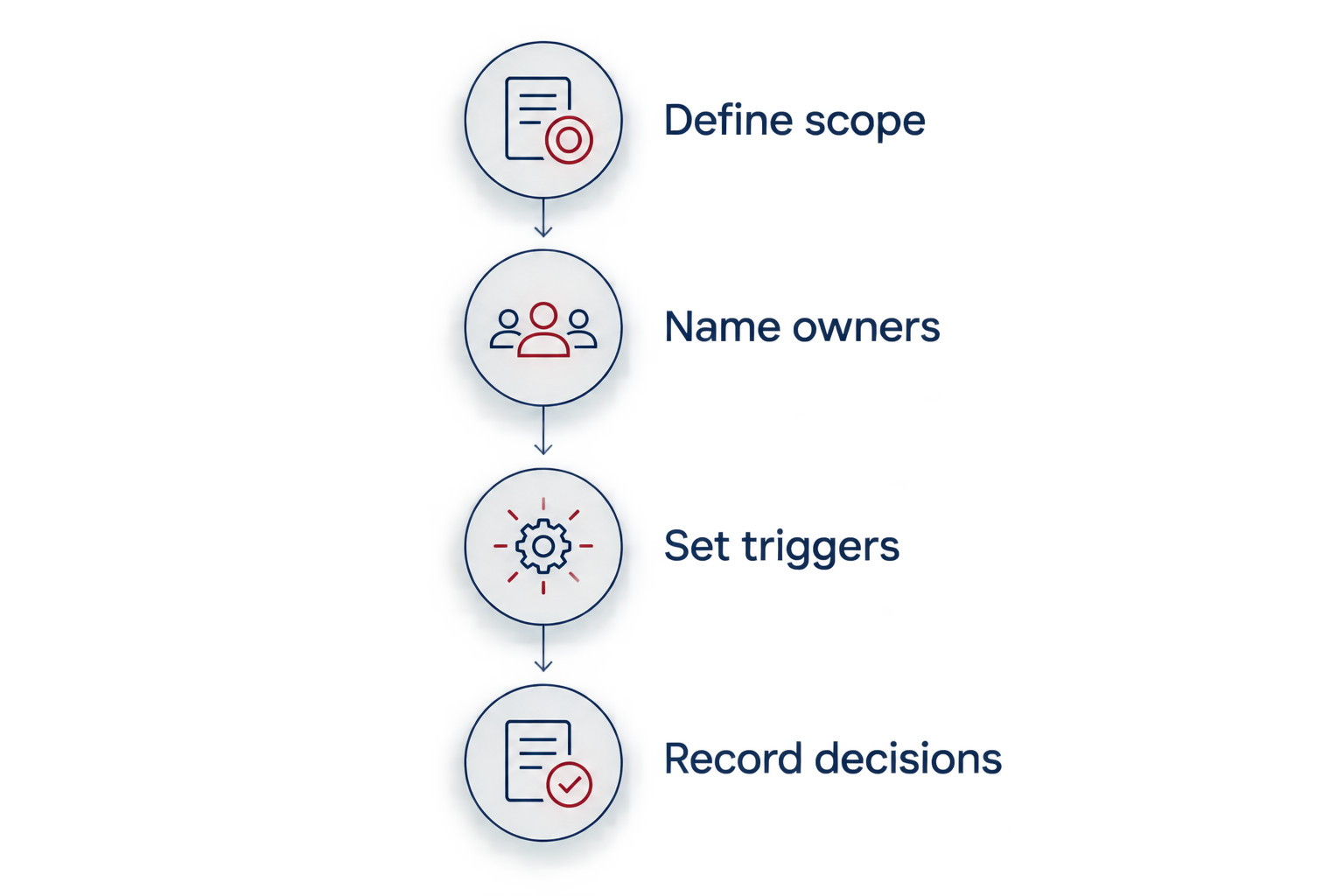
A named responsibility is more useful than an assumed service.
Timing belongs in this discussion. Under the IRS rules for a deferred Section 1031 exchange, replacement property generally must be identified within 45 days, and receipt generally must occur within 180 days or by the return due date, including extensions, if earlier. Those are transaction deadlines, not scheduling preferences.
A firm selected after the relevant decision cannot recreate an expired deadline. Whether you choose a focused adviser or a broader organization, establish who receives notice before a property sale, ownership change, or major transaction.
This is also where privacy becomes concrete. Ask how documents are exchanged, who receives access, and how approvals are recorded. Brand positioning alone does not establish those procedures.
Pricing is a scope comparison, not a defensible winner
Choose neither firm on an assumed billing model. Request a written proposal that states how the work is billed, what the engagement includes, and what requires separate authorization.
There is no sound basis here to label either firm subscription-based, hourly-only, or fixed-fee. Instead, compare the proposed structures and the behavior each encourages.
A fixed-scope arrangement gives you a defined set of deliverables, but exclusions matter. Time-based work accommodates an evolving assignment, but you need approval controls. A recurring arrangement supports ongoing work only when the contract explains what happens between filing deadlines.
For each 2026 proposal, separate:
- Historical bookkeeping cleanup from ongoing bookkeeping.
- Tax preparation from tax planning.
- Routine questions from transaction-specific analysis.
- Domestic work from international coordination.
- Original filings from amendments or notice responses.
Also identify your responsibilities. Late records, missing ownership information, and unapproved bookkeeping changes affect the work regardless of the billing structure.
The winner is the proposal that matches the assignment and makes changes explicit. A smaller scope is not a bargain if it omits the analysis you actually need; a broader scope is not valuable merely because it includes more services.
Final verdict: choose the assignment before the firm
Choose CEOHAVEN if you are an owner hiring a tax team
Best for: A United States entrepreneur, real estate investor, content creator, or high-income professional seeking tax planning, preparation, and bookkeeping.
Your central need is coordinating the business records and tax decisions that affect you as an owner. Start here when those stated services match the assignment, then confirm deliverables, implementation responsibilities, and any specialist needs.
Choose EisnerAmper if you are hiring across disciplines
Best for: A business finance leader whose assignment includes independent assurance, international complexity, or broader accounting advisory requirements.
Start here when those capabilities are part of a defined mandate. Confirm the assigned team and scope rather than treating organizational breadth as a substitute for engagement detail.
| Dimension | Winner |
|---|---|
| Owner-focused tax brief | Focused owner-tax offering |
| Independent audit | EisnerAmper |
| Explicit bookkeeping fit | Focused owner-tax offering |
| International service breadth | EisnerAmper |
| Accountability | Tie—decide from the proposed responsibilities |
| Pricing structure | Tie—compare written proposals |
FAQ
Is CEOHAVEN or EisnerAmper better for a business owner?
CEOHAVEN is the clearer fit for an owner seeking its stated combination of tax planning, tax preparation, and bookkeeping. EisnerAmper is the stronger starting point when independent audit or broader advisory requirements define the assignment.
Which firm should I consider if my lender requires an audit?
EisnerAmper is the better starting point for an independent audit requirement. Send the lender’s exact wording and confirm engagement acceptance, independence, scope, and timing.
Can I hire a tax adviser separately from an audit firm?
Yes, tax advice and independent audit are distinct engagements. Define responsibilities and address applicable independence requirements before deciding which firm performs each service.
Which firm is better for real estate investors?
Choose according to the assignment rather than property ownership alone. Owner tax planning and bookkeeping differ from a property business’s audit, institutional reporting, or international requirements.
How should I compare the firms’ proposals?
Compare the same entities, returns, bookkeeping tasks, planning deliverables, and exclusions. Then examine assigned professionals, billing structure, implementation responsibilities, and approval requirements for additional work.
Does a larger accounting firm guarantee better tax results?
No, firm size does not guarantee a particular tax result. The relevant questions are whether the assigned team understands your facts, identifies applicable rules, and documents implementation.
What should I prepare before contacting either firm in 2026?
Prepare your recent returns, current financial records, entity structure, and a written list of decisions ahead. Include lender requirements and planned transactions so the proposal addresses the actual assignment.
One last thing
Ask each candidate to describe what happens after a recommendation is delivered. Who changes payroll, updates the books, submits the election, or confirms completion?
Advice without an implementation owner is an unfinished assignment. Your strongest hiring signal is a clear answer—not a longer list of strategies.