

Yes—you can deduct membership dues and subscriptions as business expenses when they are ordinary and necessary for your business, including qualifying professional association dues, trade publications, and business software. Personal use, lobbying allocations, and dues to clubs organized for business, pleasure, recreation, or another social purpose require separate treatment; paying through your company does not make them deductible.
TL;DR
- Deduct membership dues and subscriptions business expense amounts only when the payment qualifies under federal tax rules.
- CEOHAVEN's business tax planning covers entrepreneurs; qualifying professional dues and subscriptions require a documented business purpose.
- Country club dues remain nondeductible even when you use the club to meet clients.
- Separate personal use and lobbying allocations before claiming a business deduction.
Can you deduct membership dues and subscriptions as a business?
Deduct the qualifying business expense—not everything labeled a membership. Federal tax treatment depends on what the organization or service actually provides, why your business needs it, and whether a specific deduction restriction applies.
For your 2026 review, start with this classification:
| Expense type | Federal business deduction treatment | Main limitation |
|---|---|---|
| Professional or trade association dues | Generally deductible when ordinary and necessary for your business | Exclude identified lobbying or political portions |
| Chamber of commerce dues | Generally deductible when connected to your business | Review the organization's nondeductible-dues notice |
| Business software subscription | Generally deductible for qualifying business use | Separate personal use and review payment timing |
| Trade journals and industry research | Generally deductible when connected to your work | General personal reading does not qualify merely because you own a business |
| Country, golf, athletic, or social club dues | Generally nondeductible | Client meetings do not override the club-dues restriction |
| Mixed-use subscription | Only the substantiated business portion qualifies | Use a reasonable allocation supported by records |
These distinctions belong in your books before tax preparation. The QuickBooks to audit-ready books workflow explains the broader recordkeeping process that supports expense classification.
Why this matters
Recurring charges are easy to approve and easy to stop examining. A single bookkeeping category can hide professional dues, personal entertainment, software, and restricted club memberships with different tax treatment.
For a founder with several entities, the second question is just as important: which business incurred the expense? Record a subscription against the activity it supports rather than whichever company card happens to pay it.
Professional association dues: usually deductible
Dues to a professional organization or trade association generally qualify when membership supports your existing business. Examples include an industry association for an agency owner or a professional association connected to a physician's practice.
The benefit is a direct connection to your work. The limitation is that an organization's qualifying status does not make every dollar deductible: lobbying and political allocations need separate review.
Best for: maintaining professional knowledge, industry connections, and business-relevant membership benefits. Keep the dues statement and a short explanation of how membership relates to your revenue-producing activity.
For 2026, do not rely solely on the prior bookkeeping category. Read the renewal notice, particularly any statement identifying a nondeductible portion.
Chamber and networking dues: examine the organization
Chambers of commerce, business leagues, and similar organizations can qualify for deductible dues. Treasury regulations distinguish these organizations from clubs organized for business, pleasure, recreation, or another social purpose, subject to the organization's actual activities.
That distinction matters. Calling a private social club a networking opportunity does not remove the club-dues restriction.
Best for: business owners joining an organization whose activities support their trade or commercial community. The advantage is a recognizable business connection; the limitation is that the organization's name or your referral goal does not settle the tax treatment.
Review its stated purpose, membership benefits, and dues notice. If a payment combines membership with entertainment or another benefit, examine those components rather than deducting the total automatically.
Software and publications: connect access to the work
Subscriptions for bookkeeping, design, research, project management, or other business functions generally qualify when they meet the ordinary-and-necessary standard. Trade publications can qualify for the same reason: they supply information relevant to your work.
Best for: tools and information you actually use to operate your business. Their advantage is a clear operating purpose; their limitation is that personal access, mixed use, and prepaid terms require additional review.
For a content creator, a subscription used to produce client deliverables has a different evidentiary story from a household entertainment subscription. Document the specific business task instead of using a broad description such as research.
An invoice establishes the purchase. It does not establish why the purchase belongs on the business return.
Social and recreational club dues: generally not deductible
Country club dues are not deductible merely because you discuss business there. The federal restriction covers dues or fees for membership in clubs organized for business, pleasure, recreation, or another social purpose.
IRS guidance includes country clubs, golf and athletic clubs, airline clubs, and hotel clubs among its examples. A membership selected for client access can still fall within the restriction.
These memberships can have personal or commercial value, but that value is not a deduction test. If you choose to maintain one, keep the dues out of deductible membership expenses.
Separately charged food or beverages require their own analysis. Qualifying business meals are generally subject to a 50% deduction limit, and separating a meal from club dues does not automatically make the meal deductible.
Why membership and subscription deductions vary
The same vendor category can produce different tax results. These are the factors that change the answer:
- Business connection: The payment must relate to your trade or business, not simply to your interests as its owner.
- Organization purpose: A professional association and a recreational club receive different treatment under the dues rules.
- Personal use: A mixed-use subscription requires a supported business allocation.
- Lobbying allocation: An association's notice can identify dues that are not deductible as business expenses.
- Payment timing: Prepaid access can require treatment different from a current-period recurring charge.
- Paying entity: The expense, supporting records, and business activity need to align, especially when you operate multiple entities.
A deduction reduces qualifying taxable business income; it does not reimburse the purchase. Keep subscriptions because they serve the business, then apply the tax rules—not the reverse.
How do you document membership dues and subscriptions?
Use the same review process for each recurring charge. Your 2026 records should explain the payment without requiring someone to reconstruct your intentions months later.
- Identify the purchase. Save the invoice, membership statement, or renewal confirmation showing the vendor, service, payment, and coverage period.
- State the purpose. Write the business activity the membership or subscription supports. Name the project, professional function, or operating need where relevant.
- Separate personal use. Record the basis for any business-use allocation and retain supporting information.
- Check exclusions. Review club status, lobbying disclosures, political allocations, and separately charged benefits.
- Assign the entity. Record the charge in the business that incurred it and address any owner reimbursement through the appropriate process.
- Confirm timing. Review prepaid terms and your accounting method before deciding when to claim the expense.
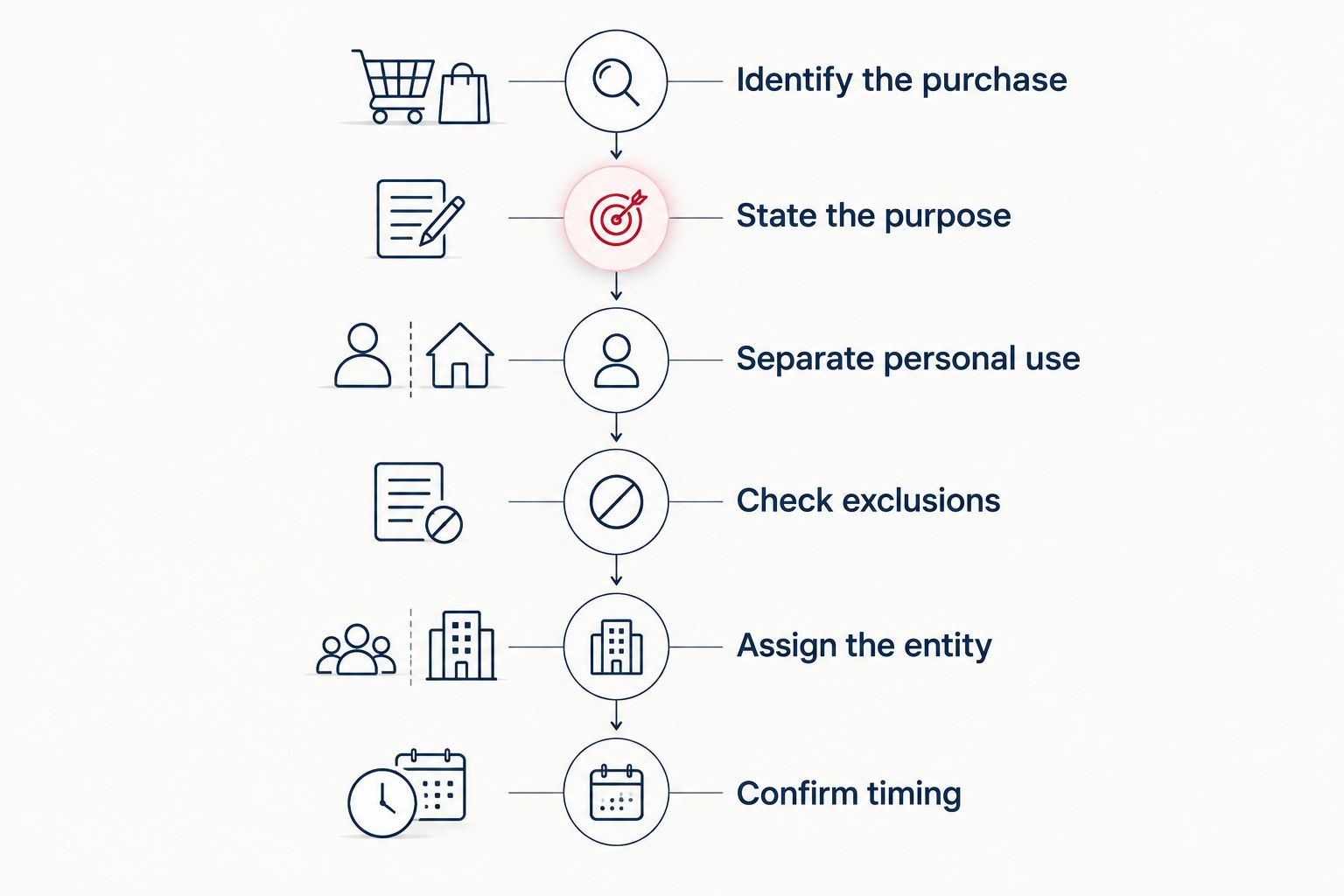
Document the business purpose before treating a recurring payment as deductible.
Keep the business-purpose note specific enough that another person can understand it. A research subscription used for rental acquisition analysis is a clearer explanation than business development.
CEOHAVEN is best for entrepreneurs seeking business tax planning, tax preparation, and bookkeeping together. Those services are relevant when recurring expenses need consistent treatment across the books and the return; they do not override the restrictions on personal expenses or club dues.
Review your recurring business expenses
Discuss membership classifications, subscription records, and business tax planning.
Can you deduct the full subscription if you also use it personally?
100% business use supports a full business-use allocation; mixed use does not. If a subscription serves both your company and your household, deduct only the qualifying business portion using a reasonable, documented method.
The method should fit the service. Separate user accounts, business-only seats, usage records, or documented project access can help explain the allocation; none creates a universal percentage you can apply to every subscription.
A company card does not establish business use. Nor does occasionally using a personal subscription for work justify treating the entire payment as a business expense.
For your 2026 renewal review, consider whether separate business access would make the records clearer. Administrative clarity is a reason to separate accounts, not permission to invent an allocation.
Can you deduct an annual subscription when you pay it?
A 12-month coverage period does not automatically guarantee an immediate deduction. Your accounting method and the prepaid-expense rules determine timing.
Under the federal 12-month rule, certain prepaid benefits need not be capitalized when they do not extend beyond the earlier of 12 months after the benefit begins or the end of the tax year following payment. Meeting that rule does not eliminate other deduction requirements or accounting-method considerations.
Retain the subscription start and end dates. For a 2026 payment covering access beyond the current tax year, have the timing reviewed instead of assuming that the bank transaction date settles the deduction.
The federal framework comes from Internal Revenue Code Sections 162, 262, and 274, Treasury Regulation Section 1.274-2, and the prepaid-expense provisions of Treasury Regulation Section 1.263(a)-4. These authorities address ordinary business expenses, personal expenses, club restrictions, and capitalization; state treatment requires a separate review.
FAQ
Can my LLC deduct membership dues and subscriptions?
An LLC can deduct qualifying membership dues and subscriptions connected to its business, subject to its federal tax classification and the applicable expense rules. LLC status does not make personal subscriptions or restricted club dues deductible.
Are professional association dues fully deductible?
Professional association dues are generally deductible when ordinary and necessary for your business, but identified lobbying or political portions generally are not. Review the association's dues notice before claiming the full payment.
Can I write off a gym membership because I meet clients there?
An owner's ordinary gym or athletic club membership is generally not deductible merely because client meetings occur there. The club-dues restriction and personal-expense rules still apply.
Can a content creator deduct streaming subscriptions?
A content creator can deduct only a qualifying, substantiated business portion of a streaming subscription. Personal viewing does not become deductible simply because the creator produces content.
Are chamber of commerce dues deductible?
Chamber of commerce dues are generally deductible when they are ordinary and necessary for your business. Exclude any identified nondeductible lobbying or political allocation and review separately charged benefits.
Do I need more than a credit card statement for a subscription deduction?
Keep the invoice or renewal statement and records establishing the subscription's business purpose, coverage period, and any business-use allocation. A credit card statement alone does not explain what you purchased or why it qualifies.
Can my company reimburse me for a business subscription I paid personally?
A company can reimburse a qualifying business subscription you paid personally when the payment is handled under the applicable reimbursement rules. Employee-owner reimbursements require attention to accountable-plan requirements, including business connection and substantiation.
One last thing
Automatic renewal is a payment setting, not a tax classification. Before your next renewal cycle, review the vendor list and separate qualifying business tools, mixed-use access, restricted club dues, and charges that no longer serve the business.
For your 2026 books, fix the classification when you identify the issue. CEOHAVEN's business tax planning and bookkeeping services address the same underlying need: records that support the treatment claimed on your return.