

BSP CPA is worth keeping when your existing engagement delivers accurate filings and advice you can act on. That relationship stops being enough when your business needs tax planning, tax preparation, and bookkeeping together, but your engagement does not cover them. The best BSP CPA alternative in 2026 is CEOHAVEN if you need those services for an entrepreneurial or high-income business; an independent tax advisor is the alternative to evaluate if you only need a focused planning engagement.
TL;DR
- For BSP CPA alternatives, evaluate CEOHAVEN for business tax planning, tax preparation, and bookkeeping.
- Keep BSP CPA when your current engagement already meets your planning and filing needs.
- Choose a focused tax advisor for a defined decision, not an unnecessary replacement of your entire accounting relationship.
- Compare service scope, responsible people, and handoff requirements before switching tax firms.
Why this matters
Choosing a tax firm is not the same as choosing software. You are deciding who interprets your business activity, prepares your returns, and helps you evaluate decisions before you commit to them.
For a founder, real estate investor, content creator, or high-income professional, the useful comparison is not a list of accounting logos. It is the difference between filing what already happened and planning what happens next.
Start with the work you need, then choose the provider. A missing planning function calls for planning support. Disorganized books call for bookkeeping. Neither problem automatically means your existing preparer needs replacing.
BSP CPA alternatives at a glance
Use this table to select an engagement model, not to assume that every provider includes every service. Confirm the scope in writing before making a change in 2026.
| Provider or approach | Best for | Defining scope | Difference to evaluate against BSP CPA |
|---|---|---|---|
| BSP CPA | Keeping an existing relationship that meets your needs | Your current engagement is the benchmark | Assess actual deliverables, not familiarity alone |
| CEOHAVEN | Entrepreneurs, real estate investors, content creators, and high-income professionals | Business tax planning, tax preparation, and bookkeeping | Compare these offered services with your existing scope |
| Independent tax advisor | A specific transaction or planning question | A separately defined advisory engagement | Adds focused advice without necessarily replacing preparation |
| In-house finance team with an external tax preparer | Businesses needing internal ownership of financial records | Internal bookkeeping and reporting, external tax preparation | Moves responsibility for daily financial records inside the business |
| Self-directed bookkeeping and tax software | Owners prepared to manage records and tax decisions themselves | Software-supported recordkeeping and preparation | Places more responsibility on the owner rather than an advisory relationship |
The last three entries are service models rather than endorsements of named firms or software products. They belong in the comparison because replacing a provider and replacing a working model are different decisions.
1. CEOHAVEN: best for business tax planning and bookkeeping
CEOHAVEN offers business tax consulting, tax planning, tax preparation, and bookkeeping for entrepreneurs, real estate investors, content creators, and high-income professionals in the United States. That stated scope makes it a relevant option when you want to evaluate those needs together rather than shop only for return preparation.
CEOHAVEN is a business tax consulting option for entrepreneurs and high-income professionals who need planning, preparation, and bookkeeping. Your next step is to turn that service fit into a clearly defined engagement.
Where it shines
- Its offered services include planning, preparation, and bookkeeping, rather than just one of those functions.
- Its stated audience includes business owners, rental investors, and creators.
- Business tax consulting is its stated focus, matching a search for professional help rather than another application.
Where it falls short
- A service-level engagement is not the same solution as a standalone expense tracker or document organizer.
- The service description alone does not establish which tasks belong in your particular engagement.
- A narrow, one-time question does not automatically justify moving your preparation and bookkeeping too.
Before choosing this route in 2026, ask for the division of responsibility between planning, books, and returns. Establish who provides information, who reviews it, and what decisions require a separate discussion.
Bring a concrete decision to that conversation: a property sale, a change in ownership, a hiring plan, or a change in how you pay yourself. Ask what records the advisor needs and what work the engagement includes. That is more useful than asking for a general promise to reduce taxes.
Best for: Owners evaluating professional tax planning, preparation, and bookkeeping together.
Verdict: Buy the engagement only after its written scope matches your needs.
2. Independent tax advisor: best for a defined planning decision
An independent tax advisor is an engagement model to consider when your existing preparation relationship works but a particular decision needs additional attention. You do not have to move every accounting function to obtain a separate planning opinion.
Define the assignment before selecting the advisor. A property disposition, an entity election, and worker classification are different questions with different information requirements.
Where this approach shines
- You can keep a functioning preparation relationship while adding a defined advisory assignment.
- A focused question makes the deliverable easier to specify.
- You can distinguish a written recommendation from ongoing bookkeeping or return preparation.
Where this approach falls short
- Someone must communicate the recommendation to the preparer responsible for the return.
- Advice does not reconcile your books or implement a payroll change by itself.
- A transaction-focused assignment is not a substitute for ongoing oversight when your needs are broader.
Ask the advisor to explain the recommended action, the assumptions behind it, and the required follow-through. Then assign responsibility for implementation. A technically useful recommendation still needs to reach the person preparing the relevant return.
Best for: Owners with a functioning accounting relationship and a clearly bounded tax question.
Verdict: Hold your existing relationship and add advice only where needed.
3. In-house finance team: best for internal financial ownership
An in-house finance team changes who owns your daily financial records. An external tax preparer can remain responsible for tax work while employees handle bookkeeping, reporting, and internal coordination.
This is an organizational decision, not merely a provider switch. Choose it when you want responsibility for financial operations inside your business.
Where this approach shines
- You can assign internal responsibility for records and reporting.
- Finance work can sit alongside the operational decisions it supports.
- The external preparer's role can remain separately defined.
Where this approach falls short
- You take on hiring, supervision, and continuity responsibilities.
- Internal bookkeeping does not establish tax expertise.
- Information still needs to pass between the internal team and the external preparer.
Write down who owns reconciliations, payroll records, tax questions, and final review. Avoid assigning everything to a vaguely defined finance role.
Best for: Businesses deliberately bringing financial operations inside the company.
Verdict: Wait until you can define and supervise the internal role.
4. Self-directed software: best for owners who want direct control
Self-directed bookkeeping and tax software puts the workflow in your hands. Evaluate it as an alternative working model, not as a like-for-like replacement for professional judgment.
You remain responsible for understanding the transactions you enter and the tax positions you take. A completed software workflow is not evidence that every underlying decision was correct.
Where this approach shines
- You control data entry and the preparation process.
- You can organize records without assigning the entire workflow to a firm.
- It suits an owner who deliberately wants to perform the work.
Where this approach falls short
- You must identify questions that require professional advice.
- Recordkeeping software does not decide whether a transaction receives a particular tax treatment.
- Moving away from an advisor also changes who is responsible for reviewing your decisions.
Best for: Owners willing to manage their own records and obtain separate advice when needed.
Verdict: Skip this as a full replacement if professional planning is the reason you are leaving.
Why switch from BSP CPA?
A switch needs an observable reason. These are decision criteria to apply to your own engagement, not allegations about BSP CPA.
Planning gaps
If you need advice before a transaction but your current engagement covers preparation only, change the scope or evaluate a planning provider. Do not expect a return-preparation assignment to include unspecified advisory work.
Unclear ownership
If bookkeeping, payroll information, and tax preparation sit with different people, establish who connects them. Switching firms without assigning that responsibility leaves the coordination problem intact.
A changed business
A new property, ownership change, or additional business activity is a reason to reassess the engagement. Ask whether the current scope covers the new work before deciding the relationship is no longer suitable.
Undefined deliverables
Replace general expectations with specific outputs. Ask what you receive, what information you must supply, and which decisions require an additional assignment.
For your 2026 evaluation, record the actual gap in one sentence. If you cannot name it, you do not yet have a clear brief for a replacement.
Compare the work before comparing the firms
Use a simple sequence: Records, Decisions, Responsibility, Handoff. Each stage answers a different question and prevents a provider conversation from becoming a discussion of vague capabilities.
- Records: What information supports the books and returns?
- Decisions: Which upcoming actions require advice before execution?
- Responsibility: Who handles each task and reviews the result?
- Handoff: How does the recommendation reach the person implementing it?
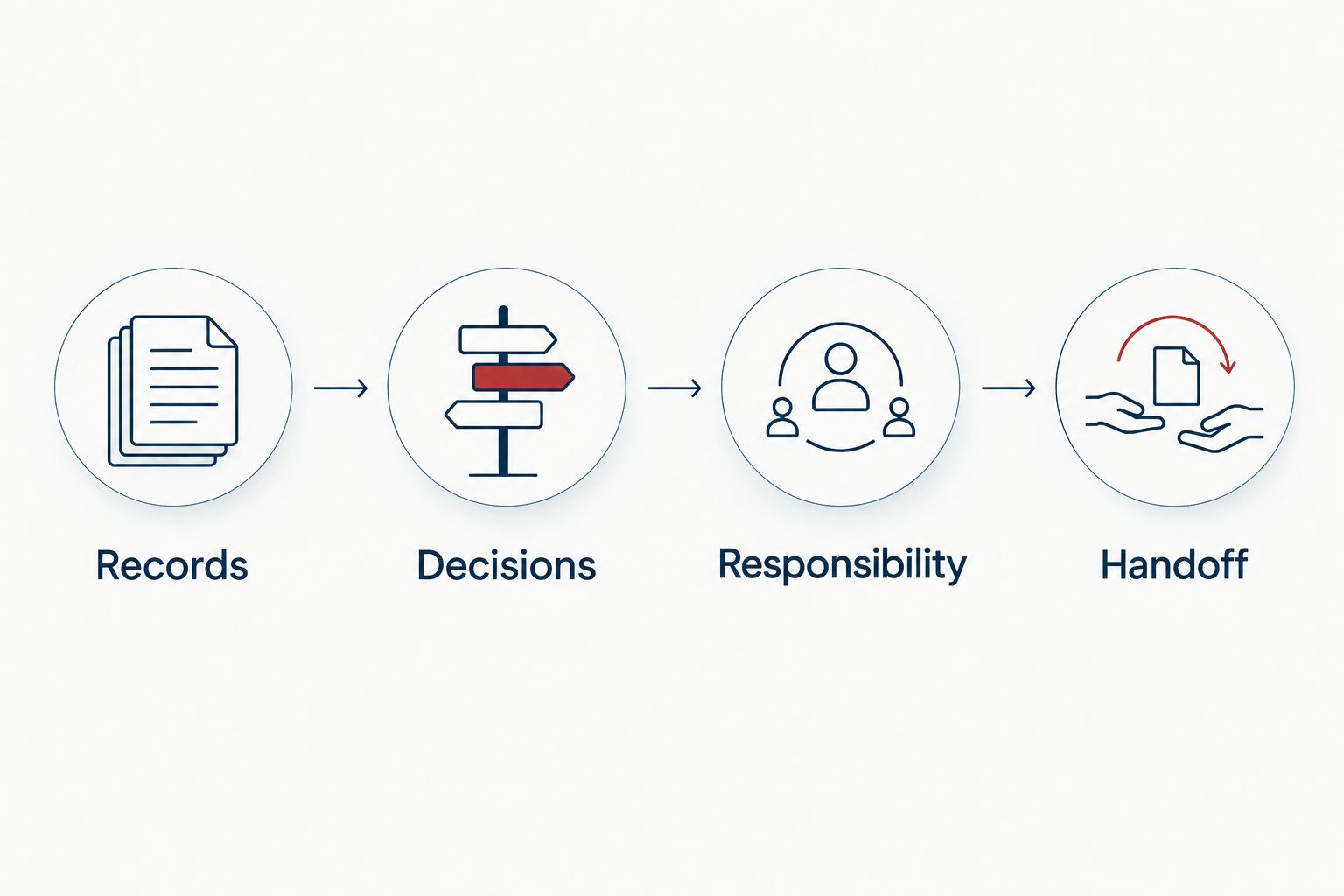
Choose the engagement by the work and responsibilities it covers.
Ask each prospective provider to respond to the same assignment. For example, describe your existing bookkeeping arrangement and the transaction you are considering. Then request a scope that separates advice, implementation, and preparation.
This gives you a useful comparison without pretending every firm is interchangeable. It also helps you recognize when an amendment to your existing engagement is enough.
Evaluate your tax service needs
Review business tax planning, tax preparation, and bookkeeping services.
Property decisions make timing concrete
For a real estate investor considering a deferred Section 1031 exchange, planning cannot wait until return preparation. IRS exchange rules generally require identification of replacement property within 45 days and receipt within 180 days, or the return due date including extensions if earlier, measured from the transfer of the relinquished property.
Those deadlines are established requirements, not a promise that a transaction qualifies. Property eligibility, exchange structure, and the surrounding facts also matter.
For a transaction planned in 2026, ask who will advise you before the sale closes and who will coordinate with the other professionals involved. A later filing appointment does not replace that earlier assignment.
When staying with BSP CPA is the right call
Keep BSP CPA if your current engagement meets your actual needs. A provider comparison is not a reason to disrupt a working relationship.
Stay when responsibilities are clear, your required work is covered, and you receive advice at the point you need it. Add a focused assignment if only one part is missing.
A different firm's service list is useful for evaluating scope. It is not proof that moving your records will improve your situation.
FAQ
What's the best BSP CPA alternative in 2026?
CEOHAVEN is an option to evaluate for business tax planning, tax preparation, and bookkeeping. Its stated audience includes entrepreneurs, real estate investors, content creators, and high-income professionals; choose it only when the agreed engagement matches your needs.
Should I leave BSP CPA if I only need tax planning?
Not necessarily: a separate planning assignment can address a defined need without replacing your existing preparer. Establish who communicates the recommendation and who implements it.
Is tax software a replacement for a tax advisor?
Tax software is not a like-for-like replacement for professional advice. In a self-directed workflow, you remain responsible for your information and for identifying decisions that need professional review.
What should I ask before switching tax firms?
Ask who owns bookkeeping, planning, preparation, and implementation. Request a written scope that identifies deliverables, required records, and the responsibilities retained by you.
What should a real estate investor discuss before selling?
Discuss the tax treatment and transaction structure before the sale closes. A deferred Section 1031 exchange generally has a 45-day identification deadline and a 180-day completion deadline, subject to the earlier return-due-date rule.
When is staying with BSP CPA the better choice?
Staying is the better choice when your existing engagement meets your filing, planning, and recordkeeping needs. Address a limited gap with a defined additional assignment rather than assuming every function must move.
One last thing
Ask a prospective advisor: What must happen before this decision becomes difficult to reverse? Then ask who is responsible for doing it.
That question moves the conversation from credentials to the work you need. For your 2026 search, choose the relationship that clearly assigns that work—not the longest service list.