

TaxAct gives landlords a self-directed route to preparing rental-income tax returns. Its ceiling is the work outside the return: property-level bookkeeping, transaction planning, and deciding how tax rules apply to your portfolio. The best TaxAct alternative in 2026 is CEOHAVEN if you need tax planning, preparation, and bookkeeping together; TurboTax if you want to keep preparing your own return with guided software.
TL;DR
- CEOHAVEN leads TaxAct alternatives for landlords who need tax planning, tax preparation, and bookkeeping rather than another filing interface.
- TurboTax, H&R Block tax software, and FreeTaxUSA are self-directed filing alternatives, not substitutes for transaction planning.
- Rental accounting and depreciation records matter more than switching tax software when your underlying books are incomplete.
- Stay with TaxAct when your rental records are accurate and you can confidently handle the tax decisions yourself.
Why this matters
Your rental return reports decisions you have already made. It does not reverse a poorly structured sale, reconstruct missing improvement records, or turn every rental loss into a deduction against your salary.
For landlords comparing alternatives in 2026, the first distinction is filing software versus a tax service. Software helps you prepare a return. A consulting engagement addresses the planning and accounting questions that determine what belongs on that return.
Choose the category before choosing the provider. Otherwise, you replace the interface while keeping the same unresolved problem.
TaxAct alternatives for landlords at a glance
These options serve different jobs. The comparison separates the service model from the software model rather than treating them as interchangeable purchases.
| Option | Best for | Standout capability | How it differs from TaxAct | Main limitation |
|---|---|---|---|---|
| TaxAct | Landlords comfortable preparing their own returns | Self-directed tax preparation | The benchmark: you retain responsibility for records and tax decisions | Filing software does not replace a coordinated planning and bookkeeping engagement |
| CEOHAVEN | Real estate investors seeking coordinated tax services | Tax planning, tax preparation, and bookkeeping | A consulting firm rather than a DIY filing application | Not a replacement interface for landlords who want to prepare everything themselves |
| TurboTax | Landlords seeking another guided filing application | Guided federal return preparation, including rental reporting | An alternative software workflow | Changing software does not settle disputed tax treatment |
| H&R Block tax software | Landlords comparing another established DIY filing workflow | Software-based federal tax preparation | Another self-preparation environment | Software use alone does not create an ongoing advisory relationship |
| FreeTaxUSA | Landlords prioritizing a direct self-preparation workflow | Federal return preparation with Schedule E support | Another route for entering and filing rental information | You still need accurate depreciation records and informed tax decisions |
Best for describes the job each option fits. It is not a claim that every edition or service arrangement includes every form, support channel, or advisory service. Confirm the scope you need before moving your records.
1. CEOHAVEN: best for coordinated landlord tax services
CEOHAVEN is a business tax consulting firm offering tax planning, tax preparation, and bookkeeping to real estate investors and other US clients. That makes it a different kind of TaxAct alternative: you are evaluating a service relationship, not another set of filing screens.
CEOHAVEN is best for landlords who want tax planning, preparation, and bookkeeping from a consulting firm. The reason to choose this model is coordination. Rental accounting, your personal return, and an upcoming property transaction should not be treated as unrelated questions.
Where the service shines
- Connected scope: Planning, preparation, and bookkeeping are all explicitly part of the firm's offering.
- Relevant audience: Real estate investors are among the clients the firm serves.
- A different decision model: You can evaluate a professional engagement instead of selecting software and carrying every tax decision yourself.
Where the service falls short
- Not a DIY application: This is not the right category if your main goal is another interface for entering your own return.
- Records still matter: Hiring a firm does not remove your responsibility to provide complete financial information.
- Scope needs agreement: Establish who handles property accounting, depreciation schedules, transaction questions, and filing responsibilities before engaging any tax firm.
| Dimension | Consulting service | TaxAct |
|---|---|---|
| Core model | Tax planning, preparation, and bookkeeping services | Self-directed tax preparation software |
| Best-fit need | Coordinating accounting and tax work | Preparing a return from established records |
| Your responsibility | Supply records and agree on engagement scope | Supply records and direct the preparation process |
| Planning question | Define it within the engagement | Address it separately from software selection |
Best for: Landlords whose main problem is coordinating tax work rather than entering return data.
Verdict: Buy the service model when coordination is the need; skip it when you only want another DIY application.
2. TurboTax: best for another guided filing workflow
TurboTax is an alternative for landlords who want to continue preparing their own tax returns. Its guided preparation approach includes rental-income reporting; confirm that the edition you select supports your complete return.
The decision is about workflow, not a different set of tax rules. The same property basis, depreciation history, and passive-loss questions follow you into the new application.
Where TurboTax shines
- Guided preparation: A question-based workflow helps organize return entry.
- Rental reporting: Its tax preparation software supports rental-income reporting in applicable editions.
- DIY continuity: You keep control of preparing and reviewing your return.
Where TurboTax falls short
- Judgment remains yours: An interview cannot establish missing facts about how you used a property.
- Bookkeeping remains separate: Return preparation does not replace property-level accounting.
- Migration requires review: Do not assume historical depreciation and suspended losses transferred correctly.
| Dimension | TurboTax | TaxAct |
|---|---|---|
| Core model | DIY tax preparation | DIY tax preparation |
| Rental task | Prepare rental reporting from your records | Prepare rental reporting from your records |
| Selection reason | Prefer its guided workflow | Prefer your existing workflow |
| Unresolved problem | Missing records or uncertain tax treatment | Missing records or uncertain tax treatment |
Best for: Landlords who understand their tax position but want a different guided preparation experience in 2026.
Verdict: Buy for workflow preference; skip as a solution to unresolved planning questions.
3. H&R Block tax software: best for comparing DIY workflows
H&R Block tax software offers another established self-preparation route. Evaluate the software itself against your rental-return requirements rather than assuming that using the brand automatically includes an ongoing relationship with a tax professional.
That distinction matters. A software purchase and a separately defined professional service solve different problems.
Where H&R Block tax software shines
- Alternative preparation environment: You can compare another workflow before committing your return to it.
- Self-directed control: You remain responsible for reviewing the return and its supporting information.
Where H&R Block tax software falls short
- Service scope is separate: Do not assume software use includes portfolio planning or bookkeeping.
- Records do not improve automatically: Missing closing statements and depreciation details remain missing.
| Dimension | H&R Block tax software | TaxAct |
|---|---|---|
| Core model | DIY filing software | DIY filing software |
| Best-fit reason | Prefer a different preparation workflow | Keep a workflow you already understand |
| Advisory relationship | Requires a separately defined service arrangement | Requires a separately defined service arrangement |
Best for: Landlords who want to compare established DIY preparation environments before choosing.
Verdict: Buy if the workflow fits your return; skip if your actual need is ongoing advice.
4. FreeTaxUSA: best for direct self-preparation
FreeTaxUSA supports federal return preparation, including Schedule E rental reporting. It belongs on your shortlist when you want to prepare your own return from organized rental records.
The name should not decide the purchase. Form coverage and your ability to review the completed return matter more.
Where FreeTaxUSA shines
- Rental reporting support: Schedule E support makes it relevant to landlords evaluating filing applications.
- Self-preparation model: You enter and review your own financial information.
Where FreeTaxUSA falls short
- Not a bookkeeping service: You still need reconciled property records.
- Not a planning engagement: A filing application does not decide whether a contemplated transaction fits your broader tax position.
| Dimension | FreeTaxUSA | TaxAct |
|---|---|---|
| Core model | Self-directed filing | Self-directed filing |
| Rental reporting | Schedule E support | Rental-income reporting |
| Decision basis | Fit with your forms and workflow | Fit with your forms and workflow |
Best for: Landlords with organized records who want a direct DIY filing alternative.
Verdict: Buy for self-preparation; skip when uncertain tax treatment is the main issue.
Why people switch from TaxAct
The useful reasons to switch are about a mismatch between the filing tool and the work you need done. They are not claims about outages, service failures, or changes to TaxAct's terms.
Your books are the bottleneck
If expenses are mixed across properties or improvements are recorded without supporting detail, another filing application will receive the same incomplete information. Fix the accounting first.
Separate rental income, operating expenses, improvements, and financing activity by property. Then reconcile those records to the documents supporting your return.
You need planning before a transaction
Under the IRS's general MACRS rules, residential rental buildings are usually depreciated over 27.5 years; land is not depreciable. That distinction makes purchase allocations and historical basis records consequential beyond the current return.
A like-kind exchange has its own clocks. IRS deferred-exchange guidance generally requires identification within 45 days and receipt within 180 days, or the return due date including extensions if earlier.
These are established federal rules relevant to a 2026 decision, not software features. Speak with a qualified adviser before signing or closing when the tax structure matters.
You need continuity across returns
Suspended passive losses and accumulated depreciation do not disappear when you switch applications. Preserve the supporting schedules and verify the opening information in your new workflow.
Your migration has succeeded only when the tax history remains intact.
Choose the right alternative before moving records
Use this sequence to make your 2026 decision. It prevents a software comparison from becoming a substitute for solving the underlying tax problem.
- Define the problem: Decide whether you need better filing screens, cleaner books, or professional tax judgment.
- Gather records: Collect prior returns, depreciation schedules, closing statements, and property-level accounting.
- Confirm coverage: Check the forms or engagement responsibilities needed for your actual return.
- Review carryovers: Verify depreciation, basis, and suspended losses before approving the filing.
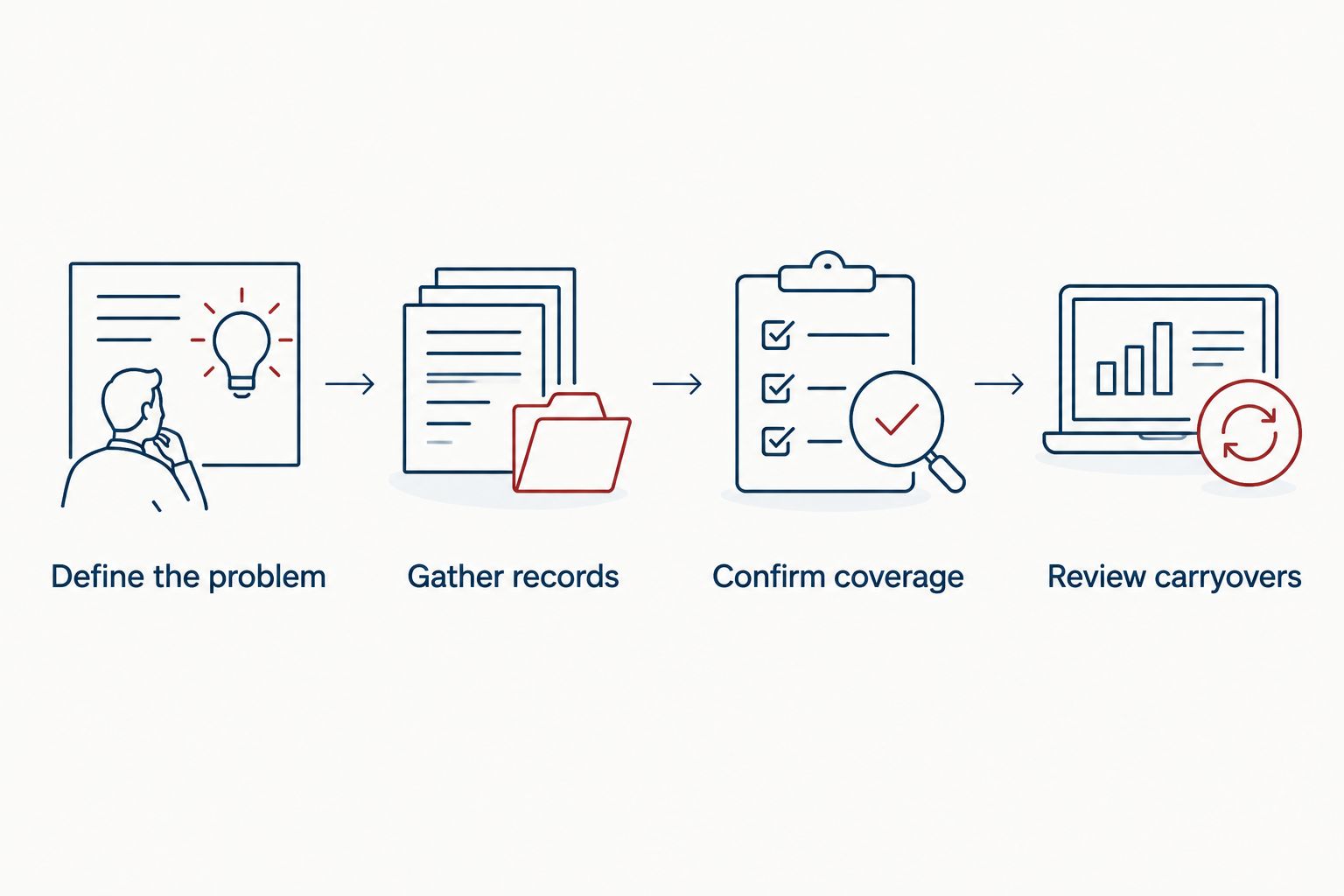
Choose the service model before transferring your tax records.
Ask a prospective firm what the engagement covers. Ask a software provider whether the selected edition supports the forms you need. Neither question can be answered by a headline ranking alone.
Discuss your landlord tax needs
Review tax planning, tax preparation, and bookkeeping services for your real estate business.
When staying with TaxAct is the right call
Stay with TaxAct when your records are complete, your tax treatment is settled, and its workflow meets your filing needs. Switching applications is optional; maintaining accurate tax records is not.
An uncomplicated ownership structure does not eliminate the need to understand basis, depreciation, or passive-loss limitations. But if you already manage those responsibilities confidently, a new provider must solve a specific problem to justify the move.
For your 2026 filing decision, write that problem down first. If you cannot name it, keep the existing workflow and focus on record quality.
FAQ
What's the best TaxAct alternative for landlords in 2026?
CEOHAVEN is the best fit on this shortlist when you need tax planning, preparation, and bookkeeping rather than DIY software. TurboTax, H&R Block tax software, and FreeTaxUSA fit landlords who want to continue preparing their own returns.
Is TurboTax better than TaxAct for rental property?
TurboTax is a better fit when you prefer its guided preparation workflow and the selected edition supports your return. A different interface does not resolve missing depreciation records or uncertain rental tax treatment.
Can FreeTaxUSA handle rental income?
FreeTaxUSA supports Schedule E rental-income reporting. You still need complete property records, depreciation information, and any applicable carryovers to prepare an accurate return.
Do landlords need a tax adviser instead of software?
Landlords need professional advice when the unresolved issue is tax judgment rather than data entry. Property sales, exchange planning, unclear basis, and passive-loss questions warrant evaluation before you rely on a filing workflow.
Will switching tax software fix my rental bookkeeping?
No, switching tax software does not reconcile your rental books. Organize income, expenses, improvements, and supporting documents by property before moving the information into another application.
What records should I keep when leaving TaxAct?
Keep your filed returns, depreciation schedules, basis records, suspended-loss schedules, and supporting property documents. Verify that the new software or preparer carries the relevant historical information into the next return.
When should I stay with TaxAct?
Stay with TaxAct when your records are accurate, you understand the tax decisions, and its workflow supports your filing needs. Switch only when another application or service addresses a specific unmet requirement.
One last thing
The most important part of switching tax providers is preserving your property's tax history. A clean new return is not enough if the starting basis, accumulated depreciation, or suspended losses are wrong.
Before moving anything, save the supporting schedules separately from the return PDF. Then make their review an explicit part of the handoff. That is a more useful safeguard than choosing the most familiar name.