

Best for investors seeking tax planning, tax preparation, and bookkeeping together: CEOHAVEN. For a specific transaction, choose a real estate CPA with relevant transaction experience; for investor partnerships, prioritize partnership-tax expertise; for straightforward rentals, choose a clearly scoped compliance engagement.
TL;DR
- CEOHAVEN is the best fit here for investors seeking tax planning, tax preparation, and bookkeeping together.
- Choose a real estate CPA by your ownership structure, rental activity, and next transaction—not firm size.
- Partnership investors need allocation and basis expertise; individual landlords need accurate property records and depreciation schedules.
- Confirm CPA credentials, engagement scope, and responsibility for specialist work before signing.
Why this matters
A rental return records decisions you already made. Tax planning addresses decisions while you still control them: how to acquire a property, document improvements, structure ownership, and prepare for a sale.
The best real estate CPA relationship in 2026 starts with your next decision, not a promise of the largest deduction. A high-income founder buying rentals needs a different engagement from a partnership admitting investors. Compare the service models below before choosing a firm.
What makes the best real estate CPA for investors?
Use these criteria to judge fit before comparing proposals:
- Property-level accuracy: Separate income, expenses, assets, debt, and improvements by property. A portfolio-wide total hides the details needed for depreciation and a later sale.
- Relevant tax judgment: Ask how the adviser distinguishes rental activities, dealer activity, personal use, and services provided to guests.
- Planning before transactions: Discuss acquisitions, ownership changes, refinancing, and dispositions before documents become final.
- Clear responsibility: Identify who handles bookkeeping, returns, estimates, specialist coordination, and notices. Do not assume one engagement includes everything.
- Credential and scope clarity: Verify the responsible professional's credentials and the work covered by the engagement letter.
- Decision-ready explanations: Expect the recommendation, its conditions, its trade-offs, and the records needed to support it.
Choose the adviser who can explain when a strategy does not work. An unconditional savings promise is not a substitute for analyzing your facts.
Real estate CPA options at a glance
These options represent distinct engagement choices, not interchangeable levels of the same service. Use the table to decide what kind of firm belongs on your shortlist.
| Option | Best for | Standout capability to seek | Key limitation |
|---|---|---|---|
| CEOHAVEN | Investors seeking planning, preparation, and bookkeeping together | Offers all three services and serves real estate investors | Confirm credentials and transaction-specific responsibilities in the engagement |
| Transaction-focused real estate CPA | Investors approaching an acquisition or disposition | Written analysis tied to the proposed transaction | A project engagement does not replace ongoing accounting |
| Partnership-tax CPA | Investors with partners or outside capital | Partnership allocations, basis, liabilities, and reporting | Partnership work does not automatically cover each owner's personal planning |
| Compliance-focused rental CPA | Landlords with stable ownership and organized records | Rental reporting and depreciation continuity | Return preparation alone does not establish a planning relationship |
1. CEOHAVEN: best for coordinated investor tax services
CEOHAVEN offers tax planning, tax preparation, and bookkeeping for real estate investors, entrepreneurs, content creators, and high-income professionals. That service mix makes it a relevant starting point when your rentals sit alongside business income or a demanding professional career.
The practical question is scope. Before engaging, establish which properties, entities, returns, and planning decisions the work will cover. Treat a tax consulting relationship and a CPA credential as separate questions; verify the professional responsible for any work requiring that credential.
CEOHAVEN pros:
- Offers planning, preparation, and bookkeeping rather than only return preparation.
- Explicitly serves real estate investors.
- Also serves entrepreneurs and high-income professionals with overlapping tax needs.
Engagement considerations:
- A combined service menu still requires a written division of responsibilities.
- Specialized transaction advice needs an explicit scope; do not assume it is included.
Best for: Investors who want their books, filings, and planning considered together rather than purchased as unrelated tasks.
Verdict: Buy the coordinated engagement when its written scope matches your portfolio. Start with the decision you need help making, then define the recurring work that supports it.
2. Transaction-focused real estate CPA: best before a purchase or sale
A transaction-focused real estate CPA evaluates a proposed deal before you commit. Seek an adviser who can explain the tax consequences of the actual ownership, financing, property use, and exit—not just identify a possible deduction.
For a 2026 acquisition, bring the proposed ownership structure, closing documents, intended use, and improvement plans. For a disposition, bring depreciation records and your replacement-property intentions. The analysis needs to connect the transaction to your broader tax position.
Transaction-focused real estate CPA pros:
- Concentrates attention on a decision with a defined deadline.
- Allows you to request written alternatives before signing.
- Helps establish which legal, exchange, or engineering specialists the transaction requires.
Transaction-focused real estate CPA cons:
- A project ends; recurring estimates and bookkeeping need separate ownership.
- Advice based on incomplete records needs revision when the underlying facts change.
Best for: Investors acquiring, disposing of, or changing the ownership of a property.
Verdict: Buy before the transaction becomes irreversible. Do not wait for return preparation to ask whether a different structure deserved consideration.
3. Partnership-tax CPA: best for investors with outside capital
A partnership-tax CPA addresses the relationship between the entity's tax reporting and its owners. The work includes allocations, distributions, liabilities, and basis—not simply dividing rental income according to ownership percentages.
Ask how the adviser will review the operating agreement with legal counsel and maintain the records supporting owner reporting. For a 2026 capital raise or ownership change, establish the reporting process before admitting investors.
Partnership-tax CPA pros:
- Focuses on tax issues created by multiple owners.
- Connects entity reporting with partner-level information requirements.
- Provides a defined place to address contributions, distributions, and ownership changes.
Partnership-tax CPA cons:
- Partnership reporting does not replace legal drafting or securities advice.
- The partnership's return does not resolve every owner's ability to deduct a loss.
Best for: Sponsors, joint ventures, and rental partnerships with outside investors or changing ownership.
Verdict: Buy partnership expertise when the ownership structure requires it. Do not select a partnership adviser solely because the firm prepares individual rental returns.
4. Compliance-focused rental CPA: best for stable, organized rentals
A compliance-focused rental CPA prepares the applicable returns from your records and maintains reporting continuity. This engagement fits a landlord whose immediate need is accurate filing rather than transaction design or ongoing strategic advice.
Keep the assignment narrow and explicit. Identify who reconciles accounts, updates fixed assets, tracks personal use, and answers questions about unusual expenses. Preparation becomes harder when the accountant must reconstruct undocumented activity.
Compliance-focused rental CPA pros:
- Establishes clear responsibility for tax return preparation.
- Keeps prior depreciation and current reporting connected.
- Fits an owner who already maintains organized property records.
Compliance-focused rental CPA cons:
- Filing work alone does not include proactive planning.
- Problems in the books still require correction; a tax return does not repair the underlying records.
Best for: Landlords with stable ownership, clean records, and no pending complex transaction.
Verdict: Buy for a defined filing need; skip it as your only engagement when a major transaction is approaching.
The technical questions that separate investor advisers
A real estate CPA should connect tax rules to your facts without turning every conversation into a lecture. Use these topics to test whether the discussion reaches the substance.
Depreciation is not the same as immediate deductibility
IRS Publication 946 describes general recovery periods of 27.5 years for residential rental buildings and 39 years for nonresidential real property under the general depreciation system. Land is not depreciable. Separate rules apply to other assets and circumstances.
For 2026 planning, ask how the adviser will separate land, buildings, and improvements, then determine whether deductions are usable. Accelerating depreciation does not, by itself, establish that a rental loss offsets your salary or business income.
Real estate professional status requires more than ownership
Internal Revenue Code Section 469 generally requires a qualifying taxpayer to perform more than 750 hours of services in real property trades or businesses and spend more than half of personal-service time in those activities. Additional rules and exceptions affect the analysis.
Meeting those thresholds does not independently establish material participation in every rental activity. Ask what records support the position and how the participation analysis applies to your properties. A title, an LLC, or a property purchase does not establish qualification.
An exchange has deadlines and structural requirements
For deferred exchanges, Internal Revenue Code Section 1031 generally provides a 45-day identification period and an exchange completion deadline that is generally the earlier of 180 days or the return due date, including extensions.
Those clocks are only part of the analysis. Discuss eligibility, handling of proceeds, replacement-property requirements, and specialist responsibilities before closing. Tax deferral and a good investment are separate decisions.
Turn the shortlist into an engagement
Your 2026 selection process should end with named responsibilities, not a reassuring sales conversation. Use this sequence to compare proposals on the same basis.
- Define the decision. State whether you need recurring support, transaction advice, partnership reporting, or filing work.
- Assemble records. Gather prior returns, depreciation schedules, property statements, ownership documents, and loan records.
- Test the analysis. Ask the adviser to explain the relevant rule, the missing evidence, and the downside of the proposed approach.
- Assign responsibility. Put deliverables, specialist roles, deadlines, and your own obligations into the engagement letter.
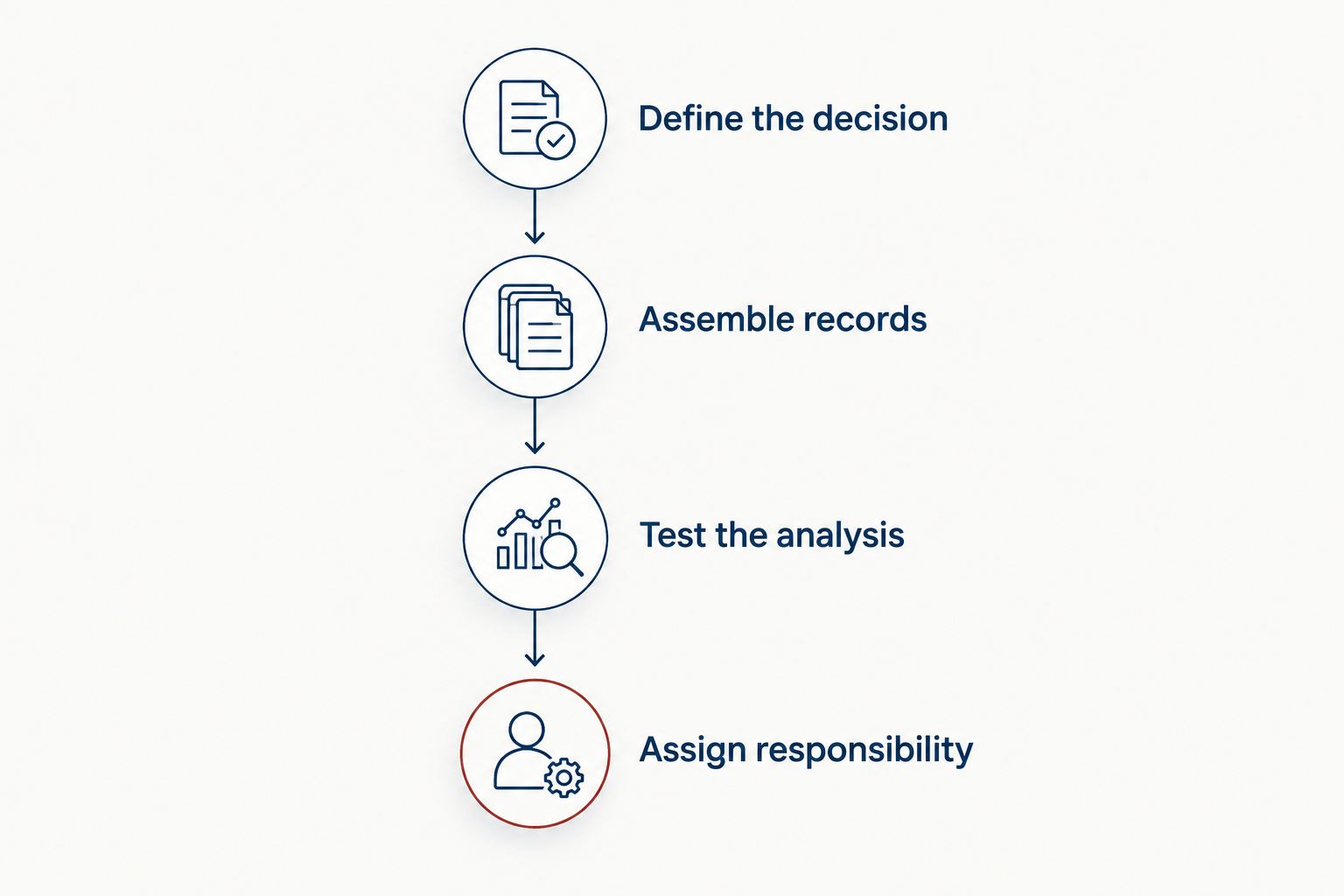
Choose the service scope before assigning the recurring work.
Read the tax planning guide for real estate investors to organize the questions behind the engagement. Then compare proposals against the decisions your portfolio actually faces.
Define your investor tax engagement
Discuss the tax planning, preparation, and bookkeeping support your real estate activity needs.
How the recommendations are ranked
The order prioritizes coordinated recurring support, then transaction advice, partnership complexity, and straightforward compliance. It is a decision tree based on the criteria above—not a claim that one engagement model replaces all the others.
Choose the model first. Then evaluate the individual firm, responsible professionals, and written deliverables against your records and upcoming decisions.
Which real estate CPA should you choose?
CEOHAVEN is the best fit here for investors seeking tax planning, tax preparation, and bookkeeping together. Choose a transaction-focused CPA for a defined purchase or sale, a partnership specialist for outside capital, or a compliance-focused CPA for stable filing needs.
For your 2026 engagement, insist on a direct answer to this question: who owns the tax decision before it becomes a reporting obligation? If nobody does, the service scope needs work.
FAQ
What's the best real estate CPA for an investor with business income?
Choose an adviser who can connect your rental activity with your business and personal tax position. When seeking combined services, confirm that planning, preparation, and bookkeeping are all included in the written engagement.
Do I need a real estate CPA or a bookkeeper?
You need bookkeeping to maintain accurate records and tax advice to interpret their consequences. One service does not replace the other; assign responsibility for both.
Is a tax consulting firm automatically a CPA firm?
No. Tax consulting services and CPA licensure are separate matters. Verify the responsible professional's license and the firm's credentials when CPA status is part of your selection criteria.
Can rental losses offset my W-2 income?
Rental losses do not automatically offset W-2 income. Passive activity rules, participation, income, and other limitations determine whether a deduction is currently available.
Should I hire a real estate CPA before buying a rental?
Hire an adviser before closing when you need help evaluating ownership, intended use, depreciation, or transaction structure. Earlier advice lets you assess alternatives before the documents and cash movements are final.
What should I bring to a real estate CPA consultation?
Bring prior returns, depreciation schedules, property-level financial records, ownership documents, and details of planned transactions. Include records of personal use and participation when those facts affect your tax position.
Does cost segregation guarantee an immediate tax benefit?
No. Cost segregation addresses the classification and timing of depreciation, while separate rules determine whether the resulting deductions are currently usable. Ask for an analysis that considers both.
One last thing
Ask who maintains the depreciation schedule after the first return. That record connects acquisition, improvements, annual deductions, and the eventual disposition. Before switching advisers, obtain the complete schedules—not just the filed return.
This article provides general education, not individualized tax or legal advice. Apply the rules to your facts with a qualified professional.