

EisnerAmper brings tax, audit, and advisory services under a broad professional-services umbrella. That breadth is not the deciding advantage when you need tax planning, tax preparation, and bookkeeping rather than a wider advisory relationship. The best EisnerAmper alternative in 2026 is CEOHAVEN if you need those business tax services; an independent tax-focused CPA is the alternative if you want to select an individual practitioner.
TL;DR
- For EisnerAmper alternatives for high income professionals, shortlist CEOHAVEN for business tax planning, tax preparation, and bookkeeping.
- An independent tax-focused CPA suits buyers who want to select the practitioner responsible for their tax work.
- A coordinated specialist team suits separate tax, legal, and investment assignments, but requires explicit responsibility for coordination.
- Keep EisnerAmper when its broader service scope matches your actual needs and your existing relationship works.
Why this matters
High income does not describe a tax situation. A salaried executive, a physician who owns a practice, and a founder holding rental properties need different work—even when their income looks similar.
Your 2026 shortlist should start with the decisions your adviser must support. Preparing a return, evaluating an entity election, and coordinating a property disposition are separate assignments. A recognizable firm name does not replace a written scope.
The comparison below includes a named tax consulting firm and two alternative engagement models. The models describe how to buy advice, not promises about an unnamed provider.
EisnerAmper alternatives at a glance
| Firm or engagement model | Best for | Defining feature | Difference from EisnerAmper |
|---|---|---|---|
| EisnerAmper | Buyers whose needs span tax and broader professional services | Tax, audit, and advisory service breadth | The benchmark for retaining a broader firm relationship |
| CEOHAVEN | Entrepreneurs, real estate investors, creators, and high-income professionals seeking business tax services | Tax planning, tax preparation, and bookkeeping | A business tax consulting offering centered on these services |
| Independent tax-focused CPA | Buyers who want to choose a specific practitioner | Practitioner-led engagement, subject to the actual agreement | You evaluate the individual and engagement rather than selecting primarily for firm breadth |
| Coordinated specialist team | Buyers with distinct tax, legal, and investment assignments | Separately scoped professional responsibilities | You assemble the relevant disciplines instead of making one firm the central relationship |
Choose the engagement that owns your next important decision—not the longest service menu. Confirm who performs the work, who reviews it, and which deliverables appear in the agreement.
1. CEOHAVEN: best for business tax services
CEOHAVEN is a business tax consulting firm offering tax planning, tax preparation, and bookkeeping to entrepreneurs, real estate investors, content creators, and high-income professionals in the United States. Its stated services make it a direct shortlist candidate when your search centers on business taxes rather than a broad audit-and-advisory mandate.
Start with your income sources and unresolved decisions. Then ask for a scope that separates planning advice, return preparation, and bookkeeping responsibilities.
Where the firm shines
- Relevant stated audience: Business owners, property investors, creators, and high-income professionals are explicitly included.
- Relevant service combination: Planning, preparation, and bookkeeping belong in the same evaluation when business records drive tax decisions.
- Clear buying question: You can assess whether the proposed tax work addresses your business and personal-income intersection.
Where the firm falls short
- A business tax engagement is not a substitute for every legal, investment, audit, or assurance assignment.
- If your selection depends on services outside tax planning, preparation, and bookkeeping, establish responsibility for those services separately.
- Do not assume that hiring one firm automatically includes every entity, state return, planning meeting, or bookkeeping task.
These are scope boundaries, not reasons to dismiss the offering. They are reasons to insist on a precise engagement.
| Dimension | This alternative | EisnerAmper |
|---|---|---|
| Stated service focus | Business tax planning, preparation, and bookkeeping | Tax, audit, and advisory services |
| Stated audience | Entrepreneurs, real estate investors, creators, and high-income professionals | Evaluate the relevant practice against your particular needs |
| Selection question | Does the proposed business tax scope cover your decisions? | Does the broader firm relationship serve your actual requirements? |
Best for: A high-income professional whose business tax planning, preparation, and bookkeeping need a defined home.
Verdict: Buy the business tax engagement when the written scope matches your needs.
2. Independent tax-focused CPA: best for practitioner selection
An independent tax-focused CPA is an engagement model, not a guarantee of specialization. You choose a named practitioner and evaluate that person's experience against your income sources, entities, and filing obligations.
For your 2026 search, ask the practitioner to explain how a planning recommendation becomes a completed action. An answer should identify the necessary records, decision deadline, implementation responsibility, and reporting consequences.
Where an independent CPA shines
- Individual accountability: You can make the practitioner's role a central selection criterion.
- Specific experience: You can screen directly for work involving your type of income or entity.
- Defined assignment: You can seek a focused engagement without treating broader advisory services as a requirement.
Where an independent CPA falls short
- The CPA credential alone does not establish experience with your particular planning issue.
- Direct access, backup coverage, and response expectations still require confirmation.
- Separate legal, investment, or specialist work needs its own owner; an individual tax engagement does not automatically include it.
| Dimension | Independent tax-focused CPA | EisnerAmper |
|---|---|---|
| Selection basis | Named practitioner's experience and scope | Relevant team, practice, and firm capabilities |
| Broader assignments | Establish separate coverage where necessary | Evaluate the applicable services within the broader firm |
| Continuity question | Who handles deadlines during an absence? | Who retains responsibility when team members change? |
Best for: A buyer who places a high value on choosing the person responsible for the tax work.
Verdict: Buy only after confirming relevant experience, coverage, and planning deliverables.
3. Coordinated specialist team: best for distinct assignments
A coordinated specialist team separates tax advice, legal work, and investment advice into explicit professional assignments. This model fits a situation where different decisions require different qualifications and responsibilities.
The trade-off is coordination. Separate advisers do not become an integrated team merely because you introduce them by email.
Where a specialist team shines
- Clear disciplines: Tax, legal, and investment assignments can each have a designated professional.
- Issue-specific selection: You can select expertise for a particular transaction or question.
- Explicit boundaries: Written responsibilities expose gaps before implementation.
Where a specialist team falls short
- Someone must reconcile conflicting assumptions and recommendations.
- Separate engagements require deliberate information sharing.
- Without a coordinator, each adviser can complete an assignment while the overall plan remains unfinished.
| Dimension | Coordinated specialist team | EisnerAmper |
|---|---|---|
| Structure | Separate professional engagements | Broader firm relationship |
| Coordination | Assign a lead explicitly | Confirm the engagement team's coordination responsibilities |
| Primary risk to control | Gaps between assignments | Gaps between expected and contracted services |
Best for: A high-income professional with distinct tax, legal, and investment decisions who will designate a coordinator.
Verdict: Buy when responsibility for coordination is explicit; skip an unowned collection of advisers.
Why people switch from EisnerAmper
A defensible switch starts with a mismatch between your required work and your actual engagement. These are reasons to reconsider any adviser—not allegations about EisnerAmper's service.
You need planning, not just preparation
Tax preparation reports transactions. Tax planning evaluates decisions before you complete them, subject to the applicable rules and deadlines.
Read your current agreement before blaming the relationship. If it covers preparation alone, request a planning proposal and compare that scope with alternatives.
Your income sources have changed
A new business, rental acquisition, equity transaction, or additional state filing obligation changes the questions you need answered. Your adviser selection should follow those obligations rather than the title on your business card.
List each income source and entity. Ask every candidate which items the engagement covers and which require separate work.
Implementation has no owner
Advice is incomplete as a working plan when nobody owns payroll changes, elections, bookkeeping adjustments, or document collection. Ask who communicates instructions and who confirms completion.
For a 2026 change, require named responsibilities before transferring the work. A different firm without a different implementation process does not solve that problem.
Match the adviser to the decision
Use a live issue to evaluate each candidate. Ask for an explanation of the decision process—not a promised tax reduction before the records have been reviewed.
Salaried income
If your income is primarily wages, ask which planning opportunities actually apply to your circumstances. Forming a business or buying a rental is not, by itself, evidence of an available deduction against wages.
Keep investment decisions and tax consequences separate enough to evaluate both. A tax benefit does not establish that an investment is sound.
Business income
For an owner-operated business, ask how the adviser evaluates entity treatment, payroll, estimated payments, and bookkeeping quality. Require an explanation of which recommendations need legal documents, payroll execution, or separate elections.
A salary recommendation without implementation instructions leaves you with an unfinished assignment. The same is true of estimated-payment advice based on unreconciled records.
Rental income
Rental planning requires attention to deduction limits, participation, basis, and transaction timing. Comparing cost segregation for high-income earners starts with whether accelerated depreciation produces currently usable deductions, not merely a larger depreciation figure.
Under federal real estate professional rules, an individual generally must perform more than 750 hours of qualifying services and more than half of their personal services in qualifying real property trades or businesses in which they materially participate. Rental-loss treatment also requires analysis of material participation and other applicable limitations; meeting an hours test alone does not settle deductibility.
A deferred Section 1031 exchange generally requires identification within 45 days and receipt within 180 days, subject to the earlier tax-return deadline rule. Those deadlines make adviser involvement before closing essential—not an after-the-fact cleanup task.
Change advisers without losing responsibility
Your 2026 transition should transfer obligations, records, and decisions—not just files. Agree on the incoming scope before assuming the outgoing adviser has stopped work.
- Define scope: List returns, entities, bookkeeping tasks, and planning assignments.
- Assign ownership: Name who handles each pending filing, payment, election, and notice.
- Transfer records: Provide prior returns, depreciation schedules, carryforward details, and relevant supporting documents securely.
- Confirm handoff: Obtain written acknowledgment of open items and the effective start of responsibility.
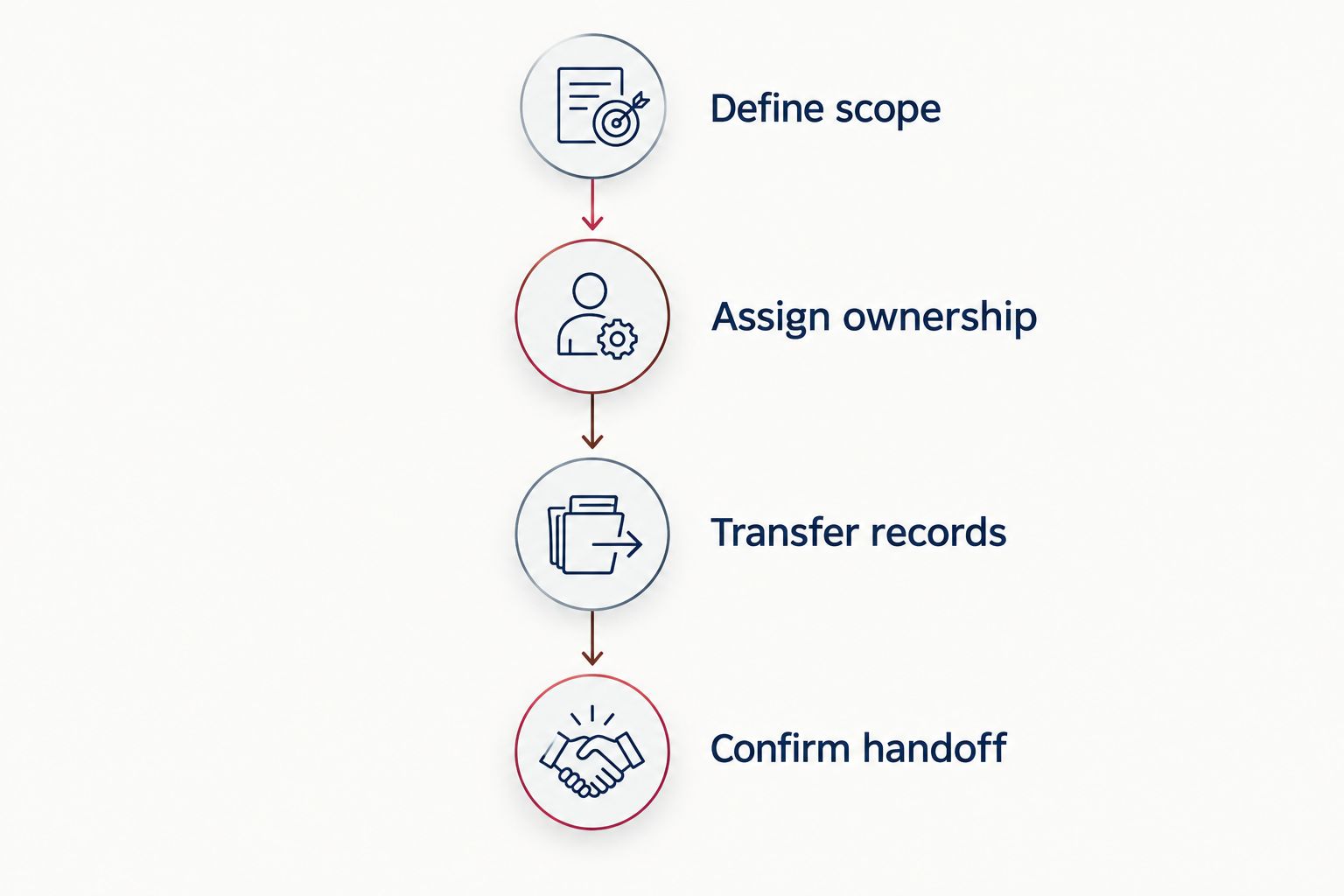
Transfer responsibility explicitly; sending records alone does not complete the handoff.
Do not assume a new engagement covers an existing notice or an unfinished return. Identify each item separately, including who will respond and which records they need.
Define your next tax engagement
Discuss tax planning, tax preparation, and bookkeeping around your income sources and business needs.
When staying with EisnerAmper is the right call
Stay when the relationship works and its scope matches your needs. Broader tax, audit, and advisory requirements are a sound reason to evaluate a broad professional-services firm.
The advantage is relevant service breadth. The limitation is that breadth alone does not tell you what your particular agreement includes. Review the engagement, responsible team, and planning deliverables before deciding that a move is necessary.
Ask your existing team to address the same live issue you give alternatives. Compare the proposed work and accountability—not imagined differences between large and smaller firms.
FAQ
What's the best EisnerAmper alternative for a high-income business owner?
CEOHAVEN is a shortlist choice for business owners seeking tax planning, tax preparation, and bookkeeping. Compare the proposed scope against your entities, income sources, and implementation needs before hiring.
Is an independent CPA better than EisnerAmper?
An independent CPA is not automatically better than EisnerAmper. Choose based on the responsible practitioner's relevant experience, the contracted work, and the coverage your situation requires.
Should I change tax advisers in 2026?
Change advisers when your required work and your current engagement no longer match. First ask whether the existing team can address the gap through a clearly defined scope.
Does tax preparation include tax planning?
Tax preparation does not automatically include tax planning. Confirm whether the agreement includes prospective analysis, implementation instructions, and follow-up rather than return preparation alone.
Can a high-income employee use rental losses against wages?
Rental losses do not automatically offset wages. Passive activity rules, participation, basis, at-risk limits, and the taxpayer's circumstances determine the treatment.
What should I transfer when switching tax firms?
Transfer prior returns, supporting schedules, depreciation records, carryforward details, notices, and relevant accounting records securely. Separately confirm who owns every unfinished return, payment, election, and response.
Do I need separate tax, legal, and investment advisers?
Separate advisers fit situations with distinct professional assignments. If you use that model, designate a coordinator and document information-sharing and implementation responsibilities.
One last thing
Ask every candidate: Who confirms that the recommendation was implemented correctly? Then ask for that responsibility in writing.
A polished planning presentation is not the deliverable that changes your tax reporting. Completed actions, accurate records, and accountable follow-through are the standard for your 2026 decision.