

Bench’s strength is outsourced bookkeeping: it helps you delegate the work of organizing financial records. The ceiling for a real estate investor is that finished books do not, by themselves, settle depreciation, passive-loss treatment, or decisions about selling a property. The best Bench alternative in 2026 is CEOHAVEN if you need tax planning, tax preparation, and bookkeeping services; Stessa if you need rental-focused financial tracking you manage yourself.
TL;DR
- CEOHAVEN leads Bench alternatives for real estate investors who need tax planning, tax preparation, and bookkeeping services.
- Stessa fits rental-property tracking; QuickBooks Online fits broader business accounting with someone responsible for the books.
- Choose the service scope before the software: rental bookkeeping and real estate tax planning solve different problems.
- Keep Bench when outsourced bookkeeping meets your needs and a separate tax adviser handles property decisions.
Why this matters
Your rentals are assets, but their accounting is not just a list of deposits and expenses. A mortgage payment includes components with different tax treatment. A renovation can require capitalization rather than an immediate deduction. Cash in the account does not tell you the property’s taxable income.
That distinction matters when you compare Bench alternatives for real estate investors in 2026. Replacing a bookkeeping service with an app changes who does the work. Replacing it with a tax consulting firm changes the scope of the relationship. Neither decision should start with a dashboard demonstration.
Choose the responsibility you want to delegate, then choose the provider. If your problem is incomplete records, fix bookkeeping. If your problem is uncertainty about a purchase, renovation, or sale, ask for tax planning before the transaction closes.
Bench alternatives at a glance
These options serve different jobs. Bench belongs in the comparison because staying with your current bookkeeping arrangement is a legitimate choice, not a failure to upgrade.
| Option | Best for | Standout role | How it differs from Bench |
|---|---|---|---|
| CEOHAVEN | Investors seeking tax planning, tax preparation, and bookkeeping services | Business tax consulting serving real estate investors | Offers the three named service categories; confirm their scope for your portfolio |
| QuickBooks Online | Investors managing rentals alongside other business activity | General business accounting software | Software you or your accountant operate, rather than outsourced bookkeeping itself |
| Stessa | Investors who want rental-focused financial tracking | Property-oriented income and expense tracking | Organizes rental finances around properties; you retain responsibility for using the system |
| Bench | Investors whose main need is delegated bookkeeping | Outsourced bookkeeping | The benchmark when recordkeeping, rather than a different accounting workflow, is the priority |
Do not treat this table as a ranking of tax outcomes. A software subscription cannot establish your eligibility for a deduction, and a service name does not establish the terms of an engagement. Ask what will be delivered, who reviews it, and which decisions require separate advice.
1. CEOHAVEN: best for tax planning alongside bookkeeping
CEOHAVEN is a business tax consulting firm offering tax planning, tax preparation, and bookkeeping services to United States real estate investors and other business owners. That makes it the first option to evaluate when your search is about advice as well as records. The decision is whether the proposed engagement covers the work your portfolio requires.
Best for: Investors who want professional services addressing both the books and the tax decisions those books support.
Where the firm shines
- The stated services include tax planning, tax preparation, and bookkeeping, rather than software alone.
- Real estate investors are an explicitly identified client group.
- A service engagement fits an investor who wants to delegate work instead of becoming the operator of another accounting application.
Where the firm falls short
- This is a professional-services choice, not a substitute for rental-management software.
- The broad service categories do not establish whether a particular engagement includes property-level reporting, multistate filings, or specialized transaction work. Put those requirements in writing.
- Hiring advisers does not remove your responsibility to supply closing documents, invoices, loan statements, and accurate ownership information.
Before you engage a firm in 2026, describe the portfolio as it exists: ownership entities, property locations, rental arrangements, and transactions under consideration. Ask for a written division of responsibilities between bookkeeping, return preparation, and planning. Do not accept a conversation about deductions as a substitute for that scope.
| Dimension | This firm | Bench |
|---|---|---|
| Primary positioning | Business tax consulting with named planning, preparation, and bookkeeping services | Outsourced bookkeeping |
| Investor fit | Real estate investors are a stated audience | Evaluate the proposed bookkeeping scope against your rental records |
| Your selection question | Does the engagement cover the tax decisions and filings you need? | Does the engagement produce the bookkeeping records you need? |
Verdict: Buy the service engagement when its written scope matches your planning, preparation, and bookkeeping needs. Do not select an adviser solely because the firm mentions real estate; select the responsibilities you can actually assign.
2. QuickBooks Online: best for broader business accounting
QuickBooks Online is general business accounting software, not a real estate tax adviser. It belongs on your shortlist when rental activity sits alongside an operating business and you want an accounting system that you or an accountant controls. Its usefulness depends on the setup and the person maintaining it.
Best for: Investors who need broader business accounting and already have someone responsible for bookkeeping and tax review.
Where QuickBooks Online shines
- It provides a general accounting environment for recording income, expenses, and business transactions.
- You can build an accounting workflow around the software rather than delegate the entire bookkeeping function to one service.
- It gives your accountant a system to work in when the engagement includes maintaining or reviewing those records.
Where QuickBooks Online falls short
- Software does not reconcile accounts or resolve questionable transactions without someone taking responsibility.
- A rental portfolio needs an intentional reporting structure. Poor categorization produces poor property comparisons, even when the totals reconcile.
- Tax judgments about improvements, depreciation, and losses remain separate from entering transactions.
Ask the person maintaining QuickBooks Online to show how each property’s income, operating expenses, debt, and capital improvements will be distinguished. Then ask how those records reach the tax preparer. A clean accounting file is useful; an unexplained year-end handoff is not.
| Dimension | QuickBooks Online | Bench |
|---|---|---|
| Delivery model | Accounting software | Outsourced bookkeeping service |
| Work ownership | You or an engaged accounting professional operates the system | Bookkeeping work is delegated under the service engagement |
| Property reporting | Requires a deliberate accounting setup | Requires agreement on the reports and detail the service will provide |
| Tax decisions | Require separate professional judgment | Require professional judgment beyond organizing transactions |
For a 2026 switch, identify the new bookkeeper before choosing the new software. Moving records into QuickBooks Online without assigning ownership simply relocates the unfinished work.
Verdict: Buy the software when an identified person will maintain it; skip it as a stand-alone answer to tax-planning questions.
3. Stessa: best for rental-focused financial tracking
Stessa focuses on rental-property finances. It is a practical alternative to evaluate when your main frustration is organizing rental income and expenses by property, rather than obtaining broader business accounting or professional tax advice.
Best for: Investors who want to manage rental financial tracking themselves and retain separate tax support.
Where Stessa shines
- Its rental-property focus matches the way landlords think about income and expenses.
- Property-oriented tracking helps keep the discussion centered on individual assets rather than one blended business total.
- It offers an alternative to using a general business accounting system for a rental-focused workflow.
Where Stessa falls short
- A tracking application is not the same purchase as an outsourced bookkeeping engagement.
- Records still need review for completeness and correct classification.
- A property dashboard does not establish whether a loss is deductible or a transaction qualifies for particular tax treatment.
| Dimension | Stessa | Bench |
|---|---|---|
| Main role | Rental-property financial tracking | Outsourced bookkeeping |
| Organizing focus | Rental properties | Financial records within the agreed service scope |
| Investor responsibility | Operate the tracking workflow and arrange tax review | Supply records and review the agreed bookkeeping outputs |
Verdict: Buy into the rental-focused workflow if you will maintain it; skip it as a replacement for professional tax advice.
Why people switch from Bench
The strongest reason to switch is a mismatch between the job you need done and the arrangement you have. That does not require an allegation about Bench’s pricing, reliability, or service quality. It requires a clear description of your own problem.
You need decisions, not just records
A completed income statement tells you what happened. It does not decide how to structure the next purchase or whether selling now fits your tax position. If those questions drive your search, compare tax-planning engagements rather than bookkeeping interfaces.
You want property-level accountability
A combined portfolio total can conceal the difference between assets. Specify the reporting you need: income, operating expenses, capital spending, and debt information attributable to each property. Ask every prospective provider to explain how that detail will be maintained.
You want control of the accounting workflow
Some investors want their own accounting system with an independently engaged bookkeeper. Others want a rental-focused application they manage directly. Those are different operating choices from outsourced bookkeeping, and both create responsibilities you must assign before switching.
Your tax records need more than bank transactions
Residential rental buildings generally use a 27.5-year recovery period under the general depreciation system; land is not depreciable. Nonresidential real property generally uses a 39-year period under that system. Bank transactions alone do not establish the building’s depreciable basis or the correct classification of every expenditure.
For a deferred Section 1031 exchange, the general identification window is 45 days after transferring the relinquished property. The exchange must generally finish within 180 days, or by the return due date including extensions, whichever comes first. These federal rules show why transaction advice belongs before the filing appointment, not why any particular provider is automatically qualified to deliver it.
How to choose without creating a second cleanup project
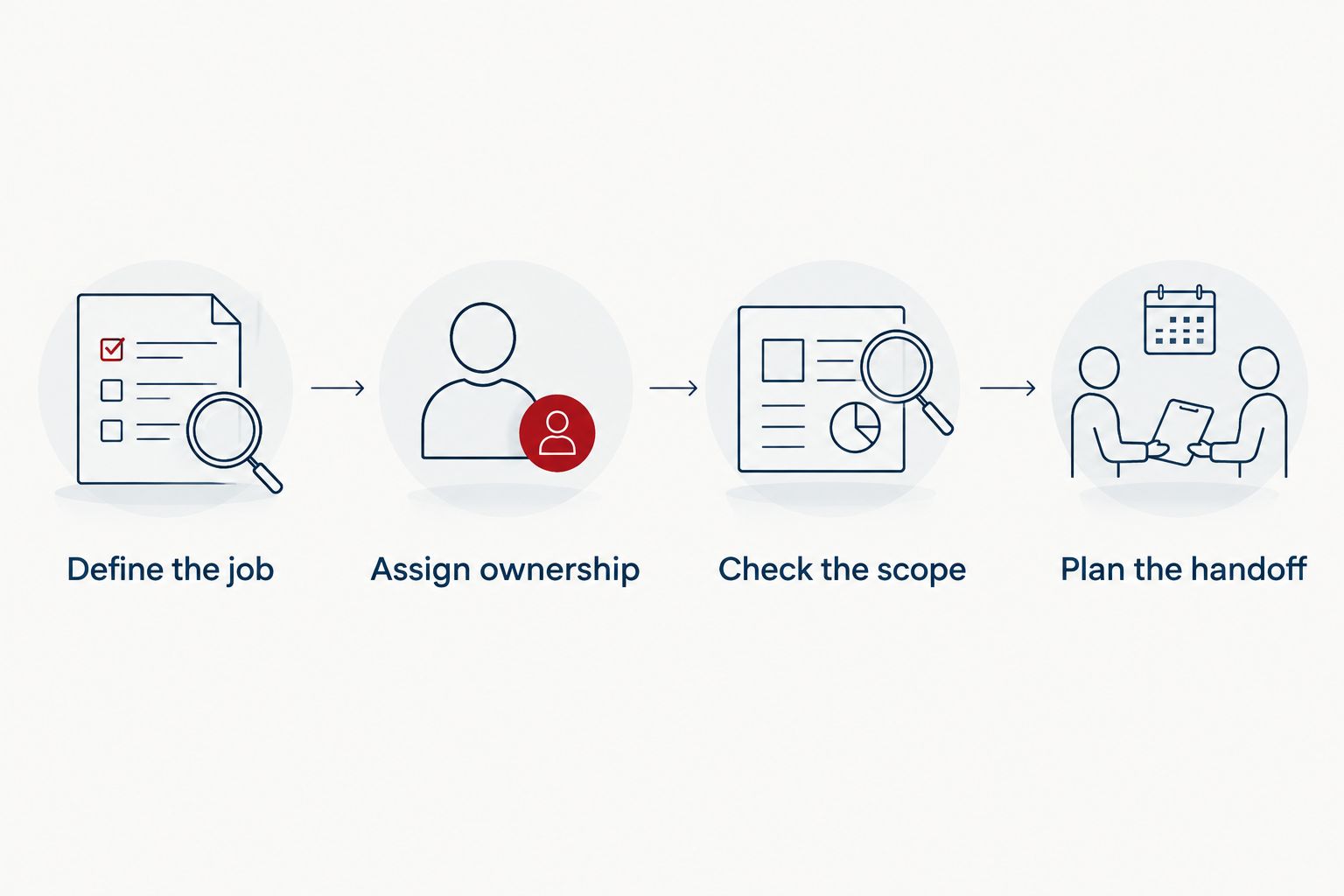
Use this sequence for your 2026 decision. It separates the advisory question from the recordkeeping question before you move financial data.
- Define the job. Write down whether you need transaction tracking, reconciled books, tax preparation, tax planning, or a combination. Include the property and entity detail you expect.
- Assign ownership. Name who gathers documents, categorizes transactions, reviews exceptions, and answers the tax preparer’s questions. Do not leave the handoff to assumption.
- Check the scope. Ask the provider to distinguish included work from separately arranged work. For software, ask your accountant whether the proposed setup produces usable records.
- Plan the handoff. Agree on the transition date and the documents needed to continue the books without losing opening balances or prior depreciation information.
A switch is ready when the responsibilities are clear, not when the new account is open. Keep access to the records needed to explain prior filings and support future sales.
Assign responsibility before moving your financial records.
What to bring to the first conversation
Prepare property closing statements, ownership details, existing depreciation schedules, loan statements, and recent financial reports. Add a short list of planned purchases, sales, or major renovations. These documents make the conversation about your actual portfolio instead of generic tax ideas.
Ask how the provider handles unresolved classifications and who approves changes before a return is prepared. The answer should describe a working process, not just a promise to keep things organized.
Discuss your tax planning needs
Explain your portfolio and the planning, preparation, and bookkeeping work you want to delegate.
When staying with Bench is the right call
Stay with Bench when delegated bookkeeping solves the problem you actually have. If your records are organized, the agreed reports serve your needs, and a separate tax adviser handles property decisions, switching systems introduces work without a clearly defined purpose.
Bench’s advantage in this comparison is the outsourced model. Its boundary is that you still need to confirm the engagement’s exact outputs and separately identify who owns specialized tax judgments. Those same checks apply to any bookkeeping provider.
For 2026, judge the arrangement by the handoff: can your tax preparer use the records, can you explain each property’s activity, and can you retrieve supporting documents? Stay when those answers are satisfactory. Change when you can name the responsibility the replacement will handle better.
FAQ
What’s the best Bench alternative for real estate investors in 2026?
CEOHAVEN is the best option on this shortlist for investors seeking tax planning, tax preparation, and bookkeeping services. Stessa fits rental-focused tracking, while QuickBooks Online fits broader business accounting with someone assigned to maintain the books.
Is Stessa better than Bench for rental properties?
Stessa is the closer fit when your priority is rental-focused financial tracking you manage yourself. Bench is the closer fit when your priority is delegating bookkeeping; compare the responsibilities, not just the interface.
Can QuickBooks Online replace a bookkeeper?
QuickBooks Online does not replace the person responsible for bookkeeping. You or an accounting professional must maintain the records, reconcile accounts, and resolve classifications.
Do I need tax planning if my rental books are already clean?
Clean rental books do not replace tax planning. Purchases, improvements, sales, ownership changes, and loss treatment involve decisions beyond recording transactions.
What should I ask before leaving Bench?
Ask who will maintain the replacement system, what records will transfer, and how the tax preparer will receive usable information. Confirm access to historical reports and depreciation records before the handoff.
Does rental-property software tell me whether losses are deductible?
Rental-property software does not establish whether a loss is deductible. Passive-activity rules, your participation, and your broader tax situation require a separate eligibility analysis.
Should I choose tax software or a tax consulting firm?
Choose tax software when you can take responsibility for the filing workflow and the judgments it requires. Choose a tax consulting engagement when you need professional analysis and assigned responsibility for the agreed work.
One last thing
A property purchase can create accounting consequences that outlast the bookkeeping system you use today. Keep closing statements and depreciation schedules accessible when you change providers; a new dashboard does not recreate the history behind a tax basis.
Before engaging CEOHAVEN or another firm for real estate tax planning, write down the next consequential decision you expect to make. Lead with that decision. The right conversation starts with what must be resolved before you act, not with which application looks cleaner.