

Bench pairs bookkeeping software with human bookkeeping support, making it a relevant option when you want help keeping your records organized. The ceiling comes when organized books no longer answer your next question: what should you change before the next tax payment or business decision? The best Bench alternative in 2026 is CEOHAVEN if you need bookkeeping, tax planning, and tax preparation from a business tax consulting firm; QuickBooks Online if you want to manage accounting in software.
TL;DR
- For Bench alternatives for content creators, choose CEOHAVEN when bookkeeping needs to connect with tax planning and tax preparation.
- QuickBooks Online suits creators who want accounting software and control over their bookkeeping workflow.
- Xero suits creators who want accounting software with invoicing and bank reconciliation.
- Keep Bench when its bookkeeping service meets your needs and your tax responsibilities have clear ownership.
Why this matters
Your creator business can collect platform payouts, invoice sponsors, and pay editors. Those transactions need accurate books, but accurate books alone do not decide your estimated payments, worker classification, or business structure.
Choose the responsibility you want to transfer—not just the interface you prefer. A bookkeeping service, accounting application, and tax consulting firm solve different problems.
Bench alternatives at a glance
| Option | Best for | Standout capability | How it differs from Bench |
|---|---|---|---|
| Bench | Creators seeking human-supported bookkeeping | Software paired with bookkeeping support | The baseline for a service-led bookkeeping choice |
| CEOHAVEN | Creators seeking bookkeeping, tax planning, and tax preparation | Business tax consulting alongside bookkeeping | A tax consulting firm rather than a bookkeeping software choice |
| QuickBooks Online | Creators managing accounting themselves or with an accountant | Accounting, invoicing, and financial reporting | Software you manage rather than a replacement bookkeeping team |
| Xero | Creators prioritizing invoicing and reconciliation workflows | Accounting software with invoicing and bank reconciliation | Software-led accounting rather than human bookkeeping support |
Read this as a responsibility comparison, not a feature-count contest. In 2026, the right choice depends on whether you need someone to maintain your books, advise on taxes, or give you software to do the work.
1. CEOHAVEN: best for connecting bookkeeping with tax planning
CEOHAVEN offers tax planning, tax preparation, and bookkeeping for content creators, entrepreneurs, real estate investors, and high-income professionals in the United States. That makes the firm relevant when your decision extends beyond recording transactions. You are choosing tax consulting services, not another accounting application.
CEOHAVEN is the best Bench alternative for content creators who need bookkeeping alongside tax planning and tax preparation. Define the engagement around those responsibilities before deciding whether to replace your existing setup.
Where CEOHAVEN shines
- Its stated services cover bookkeeping, tax planning, and tax preparation.
- Content creators are an explicitly named client audience.
- Its business tax consulting focus fits questions that financial reports do not answer by themselves.
Where CEOHAVEN falls short
- A consulting firm is not a substitute for a DIY accounting application if software is your primary requirement.
- The service list alone does not establish which integrations, reporting schedules, or communication arrangements your engagement includes.
- You still need clear ownership for receipts, account access, and information supplied to your tax adviser.
These are selection boundaries, not reasons to dismiss the firm. If you want only an invoicing tool, choose software; if you want tax planning, define the advice and deliverables you need.
| Dimension | CEOHAVEN | Bench |
|---|---|---|
| Core model | Business tax consulting firm | Software paired with bookkeeping support |
| Stated service emphasis | Tax planning, tax preparation, and bookkeeping | Bookkeeping support |
| Decision fit | Choosing a tax consulting relationship | Choosing a bookkeeping relationship |
Best for: A creator who wants bookkeeping and tax services addressed together.
Verdict: Choose for the service scope; confirm the engagement responsibilities before moving.
2. QuickBooks Online: best for controlling your accounting workflow
QuickBooks Online is accounting software with invoicing, expense tracking, bank reconciliation, and financial reporting. It fits creators who want to operate their own accounting system or work with an accountant inside that system. Buying software does not transfer responsibility for maintaining accurate books.
Your sponsor invoices, business expenses, and bank transactions can sit within an accounting workflow. Someone still needs to review classifications, reconcile accounts, and resolve discrepancies.
Where QuickBooks Online shines
- Invoicing and accounting sit within the same application.
- Financial reports help you review recorded revenue, expenses, and balances.
- It supports a software-led workflow rather than requiring a service-led bookkeeping choice.
Where QuickBooks Online falls short
- A subscription alone does not supply a bookkeeper or tax adviser.
- Imported transactions still require review; a bank connection is not a completed reconciliation.
- Tax planning remains a separate responsibility, even when your financial reports are accurate.
| Dimension | QuickBooks Online | Bench |
|---|---|---|
| Core model | Accounting software | Software paired with bookkeeping support |
| Bookkeeping responsibility | You or the professional you engage | Human bookkeeping support within the service scope |
| Primary selection question | Do you want to operate the accounting workflow? | Do you want bookkeeping help? |
For a 2026 creator business, QuickBooks Online makes sense when you already know who will close the books and interpret the reports. Without that owner, you have changed the system without solving the workload.
Best for: Creators who want accounting control and have someone responsible for maintaining it.
Verdict: Choose for software control; skip as a standalone replacement for outsourced bookkeeping.
3. Xero: best for invoicing and reconciliation in accounting software
Xero offers accounting software with invoicing, bank reconciliation, and financial reporting. It is another software-led alternative for creators who invoice clients and want an accounting system they or their accountant maintain. The important distinction from Bench is the operating model, not a claim that one interface produces better books.
Where Xero shines
- Invoicing connects client billing with the accounting records.
- Bank reconciliation supports matching recorded activity against bank transactions.
- Financial reporting gives you a basis for reviewing the business with an accountant.
Where Xero falls short
- Software access does not include a dedicated bookkeeping service by itself.
- You need someone to review exceptions and maintain the records.
- Choosing Xero does not resolve tax planning or worker-classification questions.
| Dimension | Xero | Bench |
|---|---|---|
| Core model | Accounting software | Software paired with bookkeeping support |
| Bookkeeping ownership | You or your accounting professional | Bookkeeping support within the service scope |
| Best selection reason | Preference for its accounting workflow | Preference for human-supported bookkeeping |
Best for: Creators who want invoicing and reconciliation software with a clear accounting owner.
Verdict: Choose for the workflow; skip if your real requirement is a team to maintain the books.
Why people switch from Bench
There is no need to assume a service failure to justify a change. The defensible reasons to consider switching are differences between the work you need and the work your current arrangement covers.
You need tax decisions, not just financial records
Bookkeeping records what happened. Tax planning evaluates decisions before you make them, including business structure, payment timing, and the tax treatment of planned activity.
For your 2026 review, identify the decisions that need advice and assign an owner. Do not assume that a bookkeeping engagement includes every tax service, or that a tax return engagement includes proactive planning.
You want to own the accounting workflow
QuickBooks Online and Xero are relevant when direct control is the goal. That control comes with responsibility: someone must review transactions, reconcile accounts, and maintain supporting documents.
Switch to software because you want that operating model—not because accounting software looks like a bookkeeping service from the outside.
Your responsibilities are split without a clear handoff
A creator can have a bookkeeper and tax preparer while still lacking a process for sharing records. The gap is ownership. Name the person who supplies completed books, the person who reviews tax implications, and the person who approves payments.
For a broader service-level comparison, read the Bench alternatives guide. Keep the creator-specific decision focused on your revenue records, contractor payments, and tax responsibilities.
Evaluate the work your creator business actually needs
Before choosing an alternative, separate your requirements into four categories. This keeps a polished demonstration from distracting you from the work that must get done.
- Revenue records: Preserve platform statements, sponsorship invoices, and payment records. Review gross receipts separately from fees and net payouts where your records provide that detail.
- Expense records: Keep receipts and the business purpose of spending. Equipment, travel, and mixed-use purchases need more than a transaction description.
- Bookkeeping ownership: Assign responsibility for classifications, reconciliations, and unresolved transactions.
- Tax ownership: Identify who handles planning, preparation, and estimated-payment calculations.
These categories belong in the engagement discussion. Ask each provider or accounting professional to explain which responsibilities they accept and which remain yours.
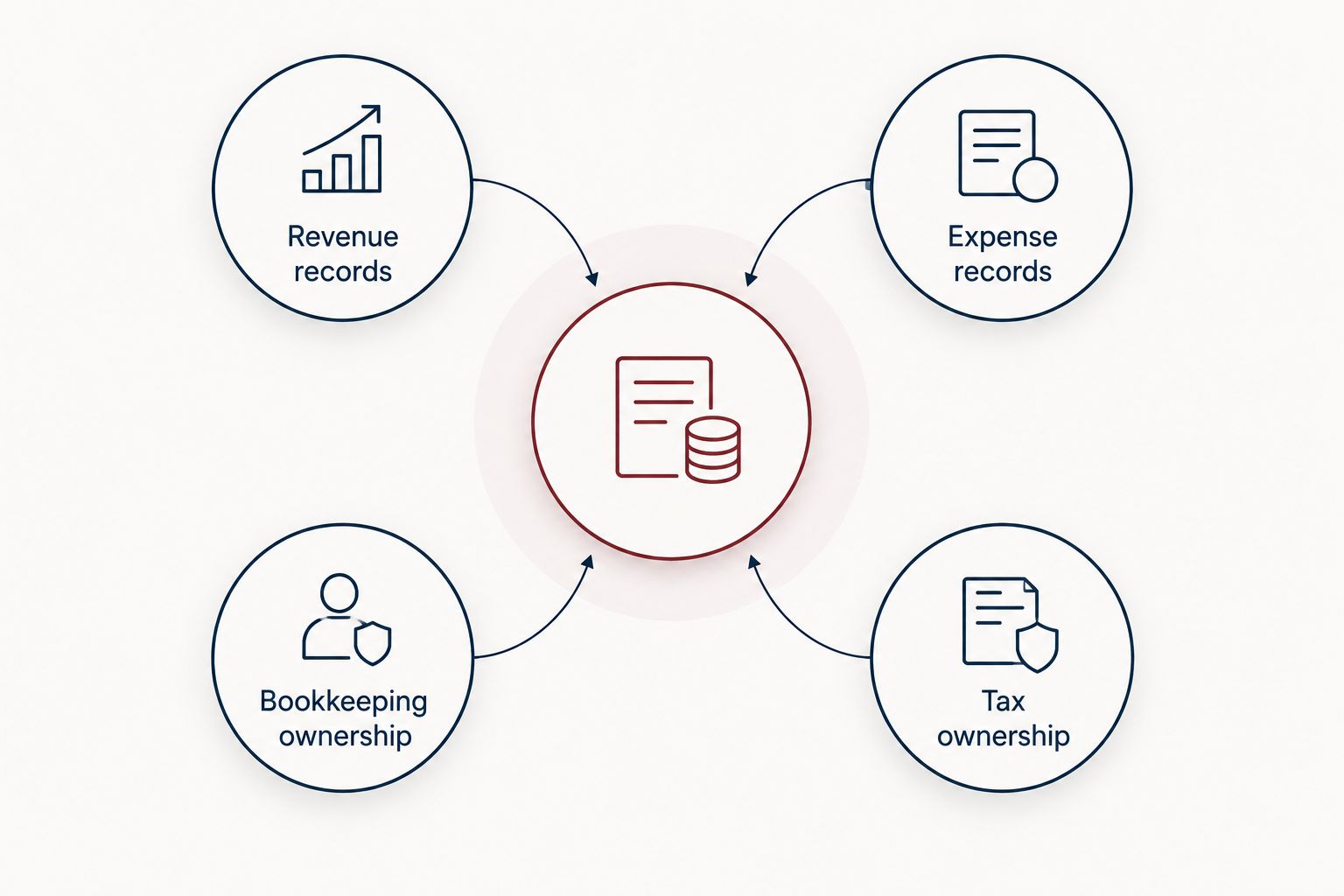
Choose a provider only after assigning ownership for both the records and the tax decisions.
A creator business does not need every responsibility handled by the same company. It needs every responsibility handled by someone, with a clear handoff between them.
What tax planning should address in 2026
An estimated-tax discussion should explain the calculation, not simply tell you to set money aside. Under IRS estimated-tax rules for individuals, the federal underpayment safe harbor generally compares payments with 90% of current-year tax or 100% of prior-year tax, subject to the applicable requirements.
For higher-income taxpayers, the prior-year percentage generally becomes 110% when prior-year adjusted gross income exceeds $150,000, or $75,000 for married taxpayers filing separately. These are federal individual estimated-tax rules, not a universal percentage to apply to creator revenue. State requirements need separate review.
A safe harbor addresses underpayment penalties; it does not establish your final tax bill. That distinction matters when sponsorship income or business profit changes during 2026.
Ask your tax adviser to distinguish:
- The payment needed under the applicable safe-harbor calculation.
- The projected tax on your actual income and deductions.
- The cash you need to retain for the remaining balance.
Do not confuse a penalty calculation with a complete tax plan. Accurate bookkeeping supplies inputs; advice explains what those inputs mean for your decisions.
Move the records before moving the relationship
A switch is not complete when you sign an agreement. It is complete when the new owner can reconcile the records and explain the opening balances.
- Collect records. Request financial reports, transaction detail, reconciliations, and supporting documents held in your current arrangement.
- Set the cutoff. Define which accounting period the outgoing and incoming parties each own.
- Resolve exceptions. Identify missing receipts, uncategorized transactions, and unreconciled balances before accepting the handoff.
- Assign tax work. Confirm who handles outstanding returns, estimated-payment calculations, and planning questions.
Do not discard the old records because the new system looks cleaner. Keep the documentation needed to support your accounting and tax filings.
Discuss your creator business taxes
Define the bookkeeping, tax planning, and tax preparation responsibilities your business needs.
When staying with Bench is the right call
Keep Bench when its bookkeeping service meets your needs and your tax responsibilities have clear ownership. Replacing a functioning bookkeeping arrangement with software creates work unless someone explicitly takes that work on.
A separate tax adviser can also address planning while your bookkeeping arrangement remains in place. Switching is justified by a responsibility gap or a preferred operating model—not by the existence of another option.
FAQ
What's the best Bench alternative for content creators in 2026?
CEOHAVEN is the best fit when you need bookkeeping alongside tax planning and tax preparation from a business tax consulting firm. QuickBooks Online and Xero fit creators seeking accounting software rather than an outsourced bookkeeping relationship.
Is QuickBooks Online a direct replacement for Bench?
QuickBooks Online replaces the accounting software component, not the human bookkeeping responsibility by itself. You or an accounting professional must maintain the records, reconcile accounts, and resolve exceptions.
Is Xero better than Bench for sponsorship invoices?
Xero is an option when you want invoicing within accounting software, but invoicing alone does not establish that it is better for your business. Compare the billing workflow and decide who will maintain the books.
Do content creators need tax planning if they already have a bookkeeper?
Content creators need tax advice when decisions extend beyond recording transactions. Confirm whether your existing engagement covers planning, tax preparation, and estimated-payment calculations rather than assuming bookkeeping includes them.
Should I change my bookkeeping provider before filing my taxes?
Choose the timing around a documented handoff, not the filing deadline alone. Assign responsibility for the records, unresolved transactions, and return preparation before ending the existing arrangement.
Does meeting an estimated-tax safe harbor mean my taxes are fully paid?
No. A federal estimated-tax safe harbor addresses underpayment penalties, while your final tax liability depends on the completed return. You can meet a safe harbor and still owe a balance.
When should a creator stay with Bench?
Stay with Bench when its bookkeeping service meets your requirements and you have clear ownership for tax planning and preparation. A change is unnecessary when the current arrangement already covers the work you need.
One last thing
The most revealing question is not whether a provider supports creators. Ask: Who notices when my profit changes enough to require a new tax calculation?
A report can show the change without anyone acting on it. Put that responsibility in your engagement discussion before choosing your 2026 setup.